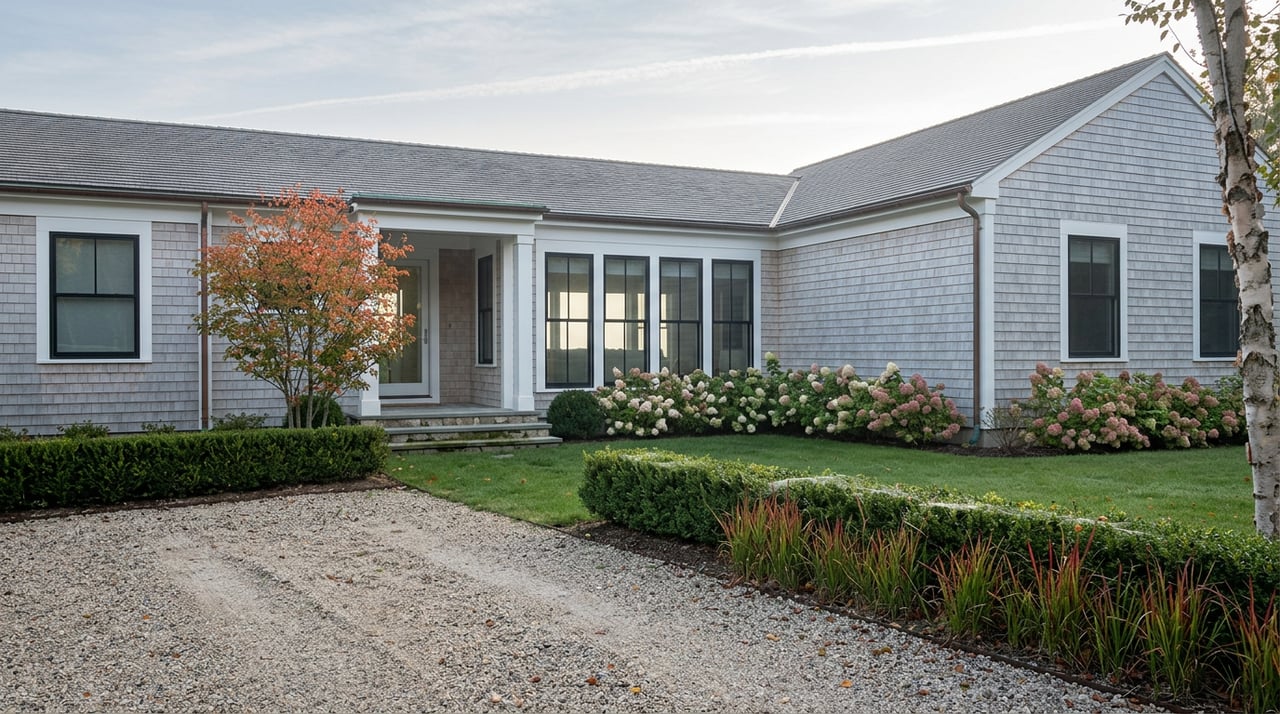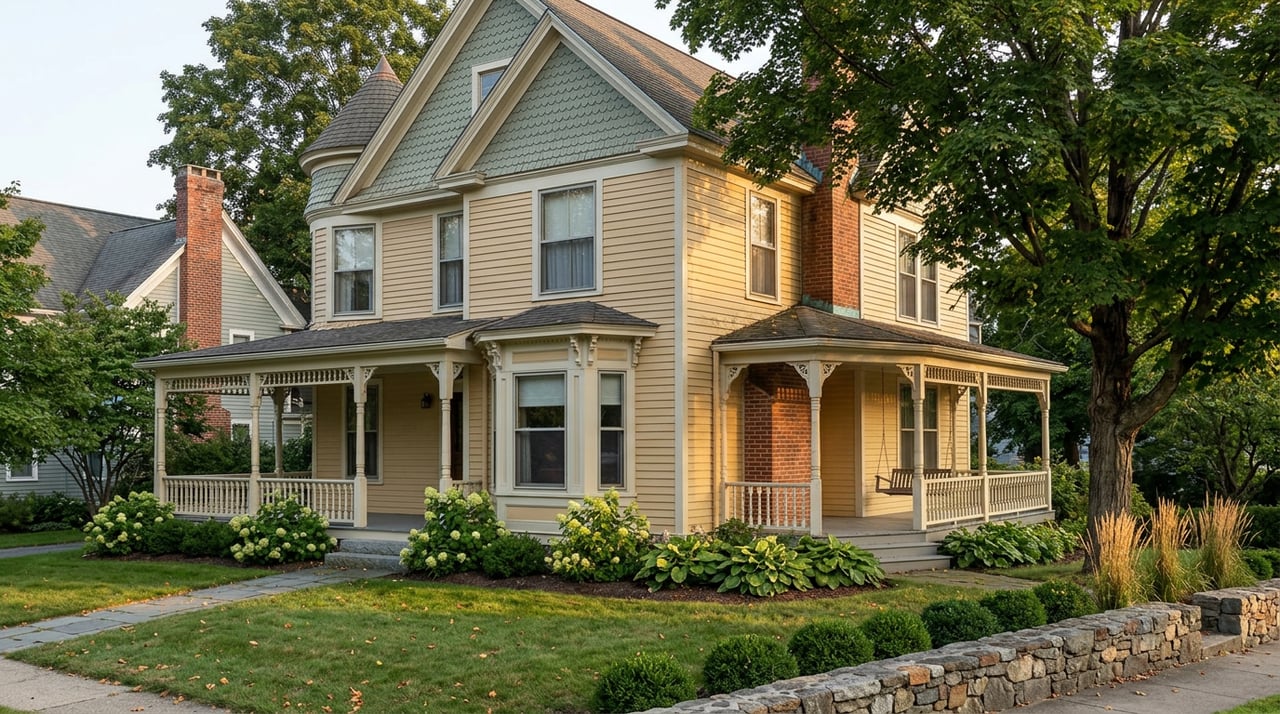
A buyer stood on the wraparound porch of a Queen Anne on Kalamazoo Street last month, running a hand along the original spindle work, and asked the question I hear at least once a season: "It's on the National Register, so I can't really change anything, right?"
The honest answer surprises most people. For a private homeowner who isn't chasing a tax credit, National Register listing does almost nothing to restrict what happens to that porch. What might eventually restrict it is a different thing entirely, a local ordinance the city adopted just over a year ago that has authority but no map yet. If you're weighing a historic home in Petoskey right now, you're not buying into a settled rulebook. You're buying into a rulebook that's still being written, one public hearing at a time.
What the National Register Actually Restricts (Less Than You'd Think)
Petoskey has two federally recognized historic districts. The Petoskey Downtown Historic District covers parts of Michigan, Lake, Mitchell, and Howard streets. The East Mitchell Street Historic District, listed the same year, runs south of the Winter Sports Park across roughly 31 blocks bounded by Rose, Kalamazoo, State, Howard, Michigan, and Division streets. It's almost entirely residential: 294 houses, 278 of them counted as historically contributing, in a mix of Victorian, Queen Anne, Shingle style, Colonial Revival, and Bungalow forms. The oldest of them, at 519 Kalamazoo Street, dates to 1877.
Here's what that listing does not do: it does not require you to get city approval before replacing a window, adding a dormer, or repainting the trim. National Register status is largely honorary for a private owner. Its practical teeth show up almost exclusively for owners pursuing state or federal historic rehabilitation tax credits, where officials told the city council in July 2025 that combined state and national credits could cover around a quarter of qualifying renovation costs. If you weren't planning to use that credit, the plaque has been decorative.
That's the part almost every generic description of Petoskey's "charming Victorian streets" leaves out. It's also the part that's about to change.
The New Rule That Actually Has Teeth
On July 7, 2025, Petoskey City Council voted 4-1 to add a new Chapter 27 to the city's code of ordinances, creating the city's first local historic district commission. City Planner John Iacoangeli explained to council that this new commission, once seated and once district lines are adopted, would be responsible for approving any exterior changes to buildings inside its districts. That's a different animal from a National Register listing. It's a local permitting authority.
The ordinance itself has real mechanisms behind it. It defines "ordinary maintenance" narrowly, as routine upkeep that doesn't change a building's external appearance, meaning repainting or minor repairs would likely stay outside the commission's reach. But it also creates a "demolition by neglect" process: if the commission finds a historic resource being allowed to deteriorate, it can require the owner to make repairs, and if that doesn't happen, the city can eventually enter the property under a circuit court order, complete the work, and charge the cost back to the owner as a special assessment against the property. That's a lien, not a suggestion.
Architect Richard Neumann, who sits on the city's Planning Commission and helped brief council on the ordinance, offered a more reassuring detail: houses that have already lost their original details likely won't be forced to restore them. But whatever original elements remain, owners would be expected to maintain. Not everyone on council was comfortable with the tradeoff. Councilmember Joe Nachtrab worried the designation could limit how owners use their land commercially, and Derek Shiels cast the lone dissenting vote, saying he supported the preservation goal but was wary of the red tape that could come with it.
Why Nobody Knows Which Houses Are In It
Here's the piece that matters most for anyone shopping a historic Petoskey address today: the ordinance only authorized the city to form a commission. It did not draw a single district line. That work falls to the commission itself, which must study the city, propose boundaries, and take those recommendations through a public hearing and a separate council vote before anything becomes binding. The new local districts don't have to match the National Register maps at all. Council also kept the option to not adopt any local district if the process doesn't hold up to public scrutiny.
As of this writing, there's no public record of that boundary study being completed or a commission actively reviewing permits. Which means a contributing 1890s home in the East Mitchell Street district that you close on this fall is, right now, still governed the same way it was last year: no local exterior review required beyond ordinary city zoning and building permits. Whether that's still true two or three years into your ownership depends entirely on lines that haven't been drawn.
The ordinance's own stated purpose is straightforward: protect the buildings that give Petoskey its character while still letting people live in them. Where that balance lands for any individual house is the part still in progress.
What This Means at the Closing Table
If you're seriously considering a home inside either historic district, or one adjacent to it, a few questions are worth asking before you write an offer:
- Does the parcel actually fall inside the National Register boundaries for the Downtown Historic District or the East Mitchell Street Historic District? The cross streets above are a starting point, not a substitute for confirming the specific address.
- Has the city's planning department published any update on the local historic commission's boundary study since the July 2025 ordinance passed? That status can change faster than public awareness of it does.
- If you're planning exterior work, is it something that would likely fall under "ordinary maintenance," or is it a change substantial enough that a future commission might have wanted a say?
- If a state or federal tax credit is part of your renovation math, that process runs through the State Historic Preservation Office and is separate from, and unaffected by, whatever the local commission eventually adopts.
None of this should scare a buyer away from one of these houses. It should change the order of operations. Document what you plan to do to the exterior before any local review requirement exists, not after.
A Note for Sellers of These Same Houses
Many of the owners selling in this district today have lived in these homes for decades, and plenty of those houses carry alterations already, enclosed porches being the most common change across the East Mitchell Street district's history. That's actually useful context for a seller: based on the Planning Commission's own testimony, houses that lost original details long ago aren't likely to be asked to put them back. What matters going forward is preserving whatever original character remains. If you're preparing one of these homes for market, keeping clear records of past renovations, and being candid about what's original versus updated, puts a buyer in a better position to make this decision with full information, which is exactly the kind of transaction where a documented, well-prepared listing earns its asking price rather than losing time to buyer uncertainty.
For a broader look at getting an older Northern Michigan home ready for market, our home preparation guide covers the practical side of that process.
Plan Your Next Move
Petoskey's historic neighborhoods aren't going to stop being some of the most character-rich addresses in northern Michigan, and this ordinance, however it ultimately gets mapped, is a sign the city takes that character seriously. But "seriously" is still being defined block by block. If you're weighing a purchase in the East Mitchell Street district or downtown Petoskey, or thinking about listing a historic home of your own, I'd rather walk you through exactly where things stand before you're under contract than after. Reach out through Kristin Keiswetter Clark and let's talk through what this particular house, on this particular street, actually means for your plans. Plan Your Next Move with someone who's watching this process as closely as you should be.
A few quick questions I hear often:
Does National Register listing mean I need city approval to renovate my home? Not on its own. The restriction that comes with National Register status mainly applies if you're using state or federal historic tax credits to fund the work. Without that credit, a private owner has generally been free to make exterior changes.
When will Petoskey's new local historic commission start reviewing home renovations? The city authorized the commission's creation in July 2025, but the required study and public hearing process to actually draw district boundaries hadn't concluded as of this writing. No property has yet been formally placed under the new Chapter 27 review requirement.
Will a home with already-altered features, like an enclosed porch, be forced to restore them? Based on testimony from the Planning Commission's own architect during the ordinance's adoption, that seems unlikely. The expectation described was that original elements still present would need to be preserved going forward, not that already-altered features would need to be reversed.