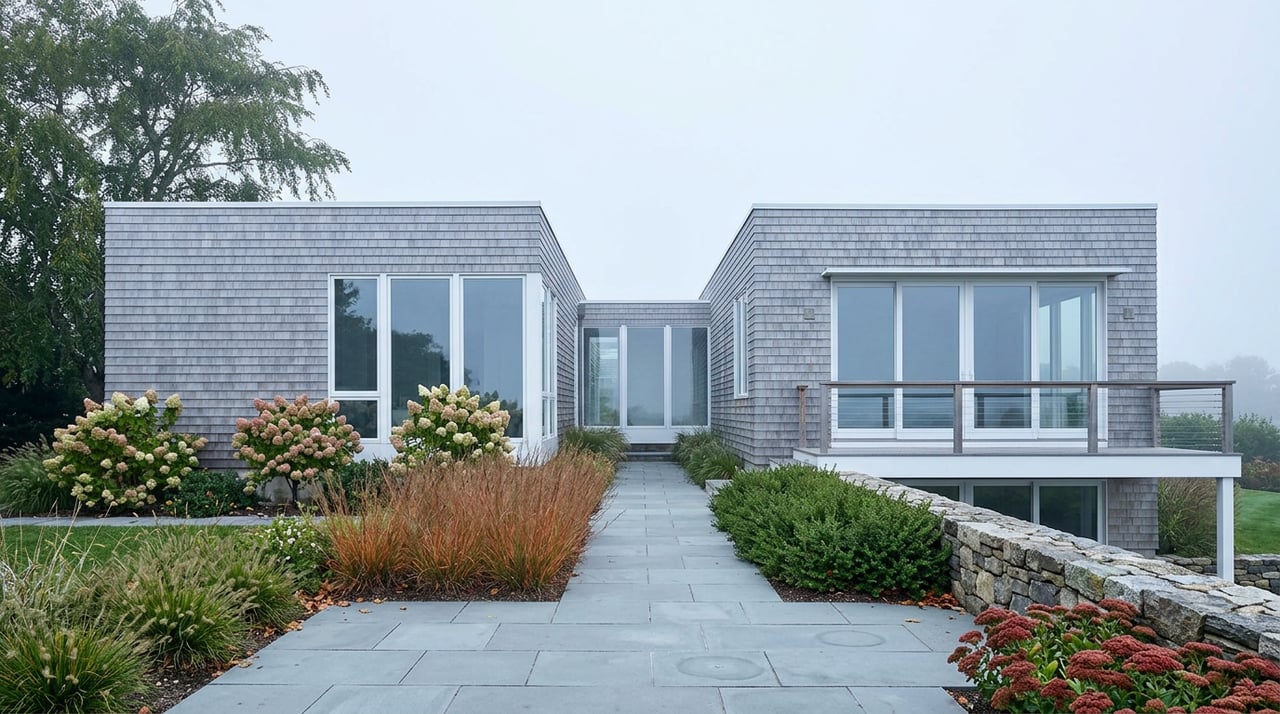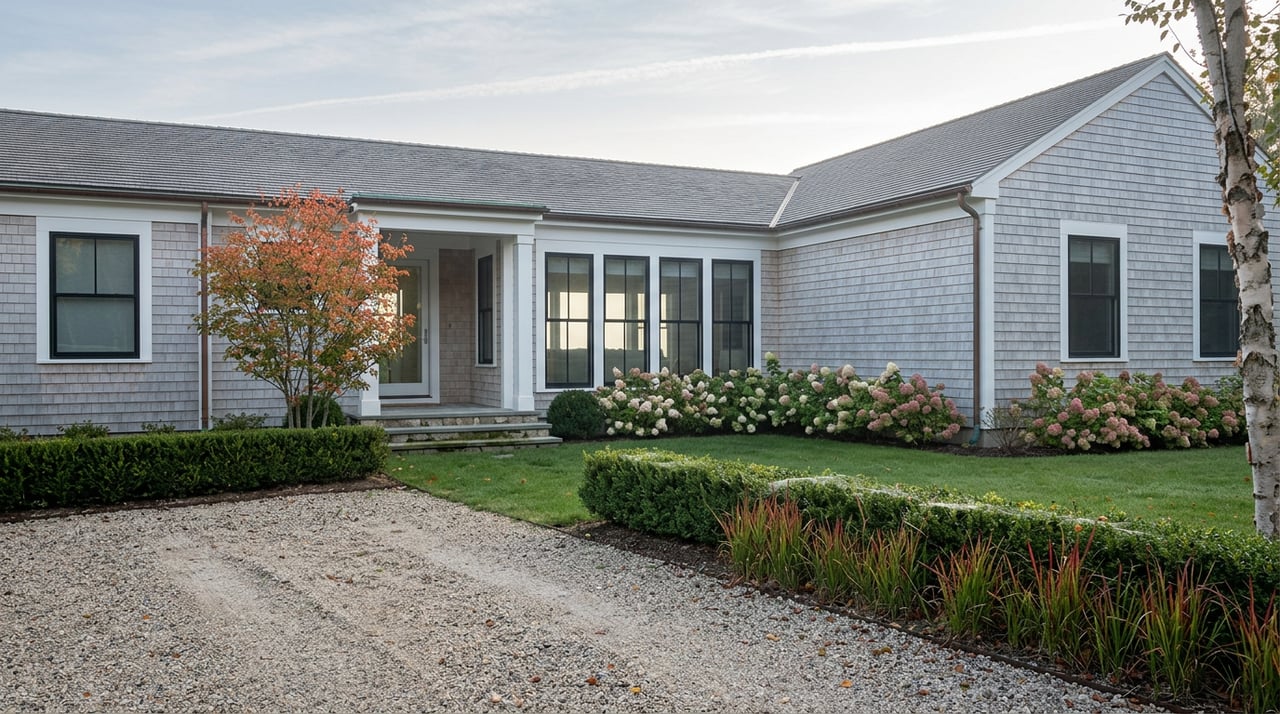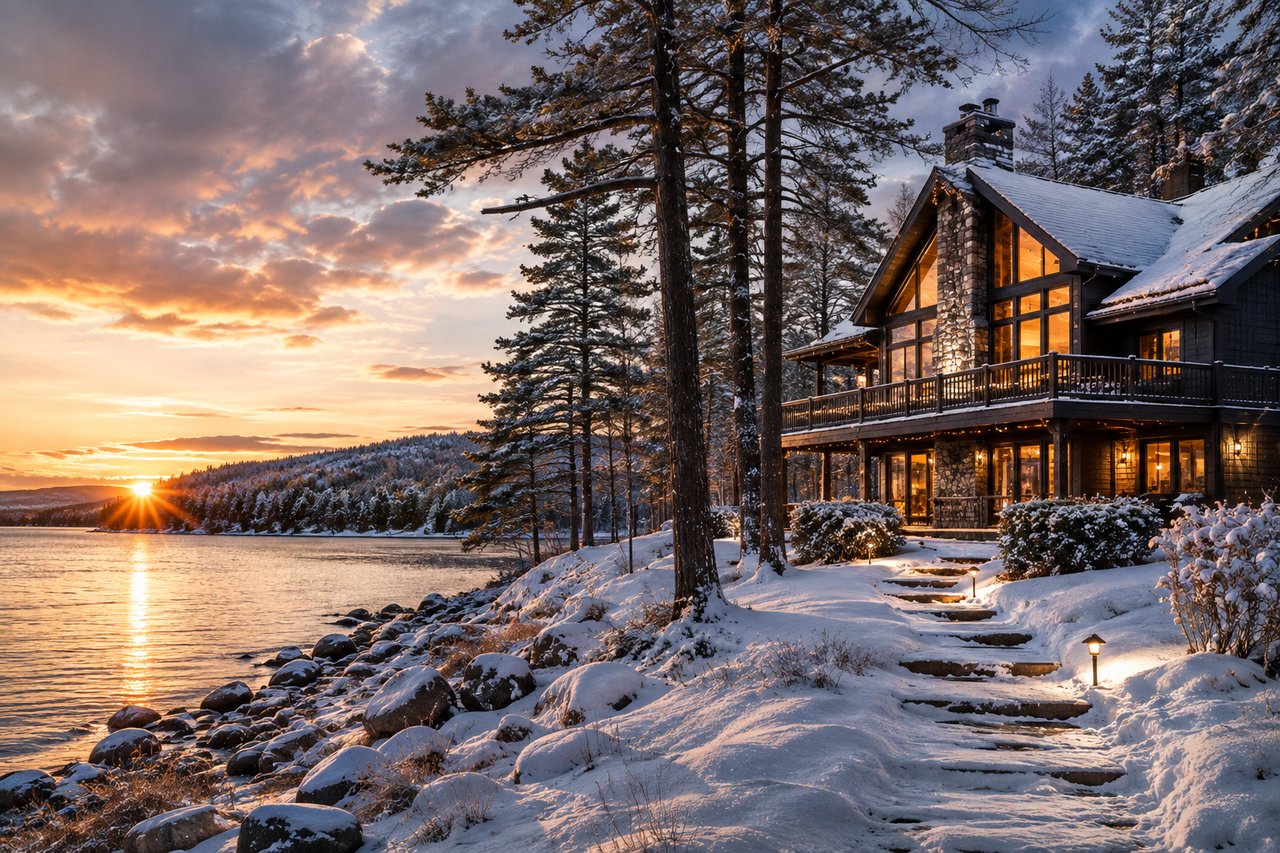
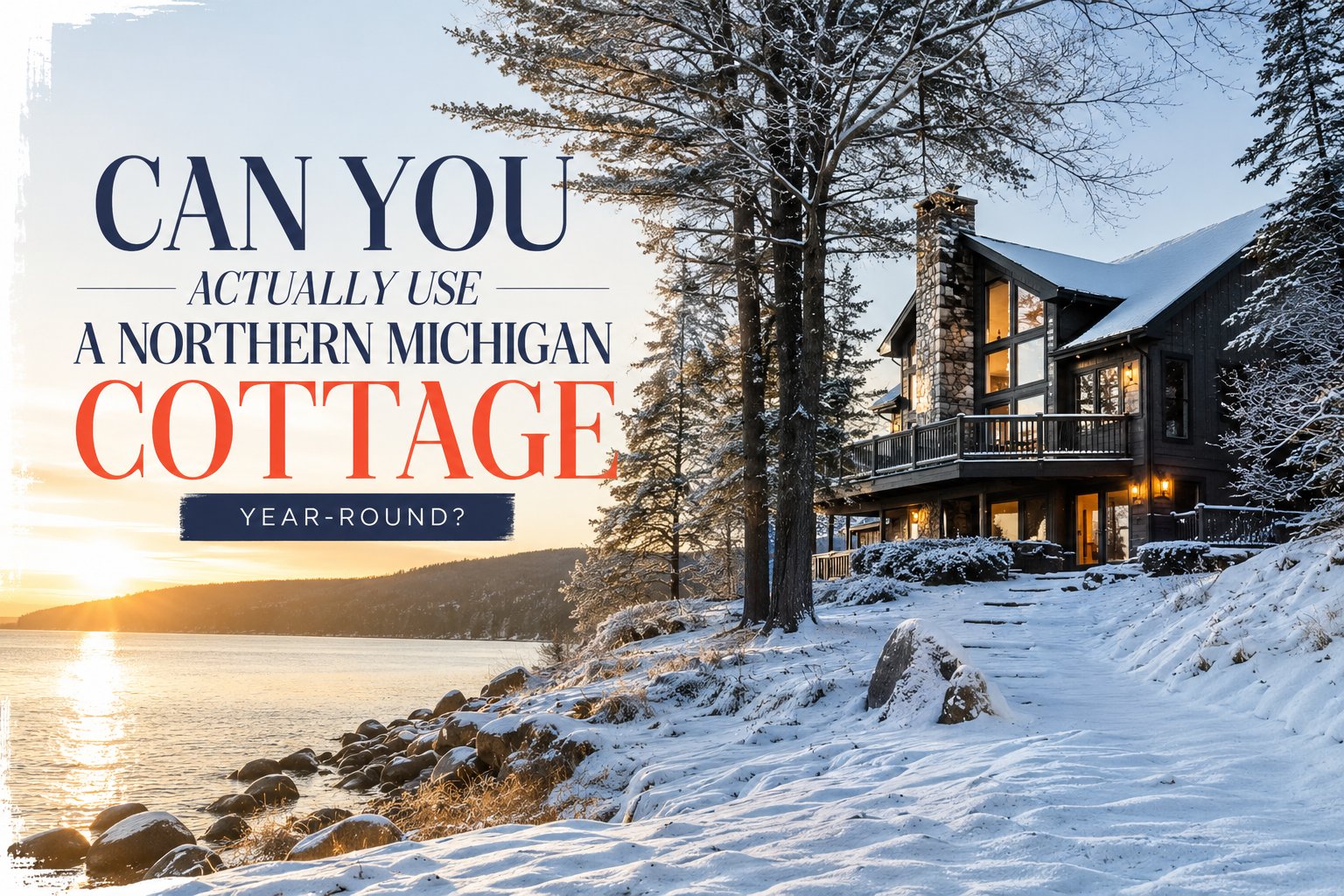
Can you actually use a Northern Michigan cottage year-round, or are some lake homes really only built for summer?
Yes — plenty of cottages around Petoskey, MI, Walloon Lake, Harbor Springs, Bay Harbor, Lake Charlevoix, and Crooked Lake can be enjoyed through all four seasons.
But the word cottage doesn’t tell me whether a property is truly winter-ready.
That is the important distinction.
When I’m helping someone buy a cottage in Northern Michigan, I’m looking beyond the lake view and asking a different set of questions: How is it heated? Is the plumbing protected from freezing? Who plows the road? What happens during a power outage? Is the water system designed for winter use? And what will it actually feel like arriving here in January instead of July?
Because Northern Michigan in winter is beautiful — but it asks more of a house.
First: “Cottage” Can Mean Almost Anything Up Here
Around the Petoskey real estate market, cottage can describe everything from a small seasonal cabin that has been in the same family for generations to a fully insulated luxury lake house with year-round mechanical systems.
Two properties can look equally charming in August and behave completely differently in February.
That’s why I wouldn’t assume a home is four-season simply because it has:
A furnace.
New windows.
A fireplace.
A paved driveway.
Or even because previous owners occasionally visited in winter.
The better question is:
Was this property designed, maintained, and accessed in a way that makes year-round ownership practical?
That answer comes from the individual property.
Heating Is the First Place I Look
A true four-season cottage needs a reliable way to maintain adequate indoor temperatures through Northern Michigan winters.
Michigan’s emergency-preparedness guidance specifically warns homeowners about frozen plumbing and recommends insulating vulnerable pipes, sealing areas where cold air can enter, and maintaining heat when a property is vacant. Michigan’s MiReady guidance says that when owners are away during cold weather, the thermostat should generally remain at no lower than 55°F to help protect plumbing.
For a buyer, I want to understand:
What is the primary heat source?
Is there supplemental heat?
Are certain rooms noticeably colder?
Where are the water lines located?
Are there crawl spaces or exterior-wall plumbing?
How old is the heating equipment?
A cozy fireplace is wonderful. It is not automatically a substitute for a dependable whole-house heating system.
And if you’re buying a second home that may sit unattended for stretches of winter, reliability matters even more.
Then There’s Insulation — The Part You Don’t See in Listing Photos
This is one reason I’m cautious when a beautifully renovated cottage is described as “year-round” without much additional information.
Cosmetic renovation and winter performance are two different things.
A buyer should pay attention to insulation, windows and doors, foundation or crawl-space conditions, attic areas, plumbing locations, and evidence of previous freezing or moisture issues.
This is exactly where a qualified home inspector and, when appropriate, licensed contractors become valuable.
I can help identify the questions we need to ask as your Petoskey real estate agent, but construction, mechanical, electrical, and structural conclusions belong with the appropriate professionals.
The Road Can Matter Almost as Much as the House
This one surprises out-of-town buyers.
You can own a perfectly winterized cottage and still have a year-round-use problem if reaching it becomes difficult after a snowstorm.
In Emmet County, maintained roads are prioritized during winter weather, with state highways and primary roads addressed before local roads, lake drives, and subdivision streets.
More importantly, some Northern Michigan roads are officially designated seasonal roads. The Emmet County Road Commission states that these roads do not receive county winter maintenance or snowplowing from November through April; property owners are responsible for their own snow removal.
So when I’m helping someone with Good Hart MI homes, Cross Village property, Harbor Springs real estate, or a more rural Northern Michigan cottage, one of my practical questions is:
Who gets you to the front door in February?
Public road?
Private association?
Contracted plowing?
Owner-maintained seasonal road?
It’s a small detail in July.
It becomes a very big detail in January.
Water and Septic Deserve Their Own Conversation
Many lakefront homes in Northern Michigan rely on private wells and onsite septic systems rather than municipal utilities.
For properties in Emmet and Charlevoix counties, the Health Department of Northwest Michigan handles permitting and evaluations for private wells and onsite sewage systems. The department also notes that modifications that increase the demands placed on an existing septic system may require review.
That doesn’t make private systems a problem. They’re common throughout Michigan.
It simply means a buyer needs to understand what is there.
For a cottage you plan to use year-round, I’d want documentation where available and appropriate inspection or evaluation of the existing systems.
I’d also want to understand how the property has historically been handled in winter.
Was the plumbing previously drained every fall?
Was the cottage kept heated?
Has the well been used continuously?
Those answers can tell us whether we’re looking at a true four-season property or a traditional summer cottage that would need additional work.
What About Power Outages?
Another very Northern Michigan question.
Winter storms can interrupt power, which matters more when the outdoor temperature is below freezing.
Michigan State Police recommends homeowners prepare for winter outages by maintaining insulation, knowing how to shut off water, and having an appropriate backup heating plan.
That doesn’t mean every lake house needs a whole-house generator.
But if you’re considering Northern Michigan waterfront as a second home and will occasionally leave it unattended, it is worth understanding how the property responds when power goes out.
Some owners also use temperature sensors or remote monitoring systems. Whether those are appropriate for a particular property is something I’d discuss with qualified contractors and your insurance provider.
Your Insurance Company Should Know How You’ll Use the Property
A cottage that is occupied primarily in summer may be treated differently from a primary residence or frequently occupied second home depending on the insurer and policy.
Rather than assuming coverage works a certain way, I always recommend asking the insurance professional directly.
Michigan’s Department of Insurance and Financial Services specifically advises homeowners to review their policy provisions and discuss questions about winter-related coverage with their insurer.
That conversation belongs before closing, not after the first winter storm.
Year-Round Use Also Means Year-Round Maintenance
Summer lake-house ownership has the obvious chores.
Dock in.
Boat in.
Furniture outside.
Landscaping.
Winter just changes the list.
Now we’re talking about snow removal, heating fuel where applicable, roof and gutter maintenance, ice, driveway access, keeping mechanical systems running, and making sure the home is checked when you aren’t there.
A larger Lake Michigan property, a Walloon Lake cottage, and a condo in Bay Harbor may require completely different levels of owner involvement.
That is why “low maintenance” is one of those terms I like to unpack.
Low maintenance compared with what?
A condo association may handle things that a single-family homeowner handles personally. But association dues, responsibilities, restrictions, and services vary, so those documents need to be reviewed for the particular property.
And Yes, There Is a Really Good Side to Winter
I don’t want this to sound like winter is simply a list of mechanical systems.
Because this is also when a Northern Michigan cottage can become something completely different.
The lake gets quiet.
The summer traffic disappears.
Harbor Springs and the surrounding area shift toward skiing and winter recreation.
A fireplace that seemed decorative in July suddenly becomes the place everyone gathers.
And the same wooded setting that felt lush in August can feel completely transformed under snow.
For some buyers, that is exactly why converting the search from summer cottage to four-season Northern Michigan home makes sense.
You’re not buying three extra months of use.
You’re buying an entirely different version of the place.
What Should Buyers Look for in a Year-Round Northern Michigan Cottage?
If I were touring properties with you, I’d want to understand the basics before assuming anything.
We’d look at the heating system, winter road access, insulation, plumbing, water and septic, roof and drainage, snow-management responsibilities, association rules where applicable, utility history when available, and how the property has historically been used.
Then we bring in the right professionals.
This is one of the benefits of a buyer’s agent in a market where two seemingly similar cottages can have completely different ownership considerations.
Under current NAR policy, MLS participants working with buyers must enter into a written buyer agreement before touring homes; the agreement defines services and compensation, and broker compensation is fully negotiable.
For me, representation is less about opening doors and much more about knowing which questions need answers once we’re inside.
What Sellers Should Know
This matters on the selling side, too.
If your cottage can be comfortably used all year, don’t bury that information.
Document it.
If there have been insulation improvements, heating upgrades, new windows, a generator, reliable winter access, updated mechanicals, well or septic work, or an association providing snow removal, those details may help buyers better understand the property.
But I wouldn’t automatically promise that any one upgrade will increase home value by a specific amount.
When I’m helping with professional listing prep or determining current home values, I want to compare your home with relevant sales and competing inventory.
What may expand the buyer pool is being able to clearly demonstrate that a property isn’t simply beautiful in July.
It works in January, too.
And that story should carry through the listing description, photography, showings, and overall marketing.
Should You Convert a Seasonal Cottage to Year-Round Before Selling?
Maybe.
But this is one of those situations where I would not renovate first and ask questions later.
Converting a three-season cottage may involve heating, insulation, plumbing, electrical, foundation, septic capacity, permits, or other building considerations depending on the property.
Before spending heavily, I’d look at the Petoskey home prices and relevant comparable sales to determine whether the likely buyer demand supports the project.
Sometimes the right buyer wants the original seasonal cottage.
Sometimes year-round capability dramatically broadens how people imagine using it.
The market and the particular property should guide that decision.
So, Can You Actually Use a Northern Michigan Cottage Year-Round?
Absolutely.
But I would never answer that question from the listing photos alone.
A true four-season cottage is about more than having heat.
It is the combination of a winter-capable home, reliable utilities, practical access, appropriate maintenance, and an ownership setup that continues working after the docks come out.
Whether you're looking at Walloon Lake property values, Petoskey waterfront living, Lake Charlevoix homes for sale, Crooked Lake MI real estate, Harbor Springs homes, Bay Harbor real estate, or a cottage farther up the Lake Michigan shoreline, those details matter.
And once you find the right one?
Northern Michigan doesn’t end when summer does.
It simply changes.
Buying or Selling a Cottage Near Petoskey, MI?
I’m Kristin Keiswetter Clark with Gaslight Group Properties, a Petoskey MI Realtor and Real Estate Agent in Petoskey, Michigan, helping buyers and sellers throughout Petoskey, Walloon Lake, Harbor Springs, Bay Harbor, Boyne City, Charlevoix, and surrounding Northern Michigan communities.
If you’re buying a home in Petoskey, comparing seasonal and year-round cottages, or wondering how four-season capability affects the positioning of a home you’re considering selling, I’m happy to help you look beyond the listing photos and understand the property itself.
Because “Up North cottage” can mean a lot of things.
The important part is knowing exactly what yours can do.
Frequently Asked Questions
Can you live in a Northern Michigan cottage during winter?
Many Northern Michigan cottages can be used year-round, but buyers should verify the property’s heating, insulation, plumbing, water and septic systems, winter road access, utility reliability, association rules, and any local restrictions before assuming four-season use.
How can I tell if a cottage is three-season or four-season?
Start with the heating system, insulation, plumbing configuration, foundation or crawl space, windows, water source, septic system, and winter access. A qualified home inspector and appropriate licensed specialists can help determine whether the property is suited to winter occupancy.
What happens if I leave my Northern Michigan lake house empty during winter?
Frozen plumbing is one of the major concerns. Michigan MiReady recommends maintaining heat when away during cold weather and generally advises setting the thermostat no lower than 55°F unless the water system is properly shut down and drained.
Are all roads to Northern Michigan cottages plowed in winter?
No. Some roads are private or officially seasonal. Emmet County’s seasonal county roads do not receive county winter maintenance from November through April, making road status an important part of due diligence.
Should I winterize my cottage if I plan to visit occasionally?
That depends on the house and its systems. If heat and water remain active, owners need a plan for maintaining safe temperatures and responding to outages. If the property is shut down for winter, winterization should be handled appropriately for its plumbing and mechanical systems by qualified professionals.
Does making a cottage four-season increase its value?
It may broaden the number of buyers who can use the property, but there is no guaranteed return. Location, lake frontage, condition, comparable sales, renovations, winter access, and current Northern Michigan home prices all affect market value.
Who can help me buy a year-round cottage near Petoskey?
Kristin Keiswetter Clark with Gaslight Group Properties works with buyers and sellers across Petoskey, Walloon Lake, Harbor Springs, Bay Harbor, Boyne City, Charlevoix, and surrounding Northern Michigan communities. A hyperlocal search can help identify the questions that matter for the individual cottage rather than relying on the word “year-round” in a listing.