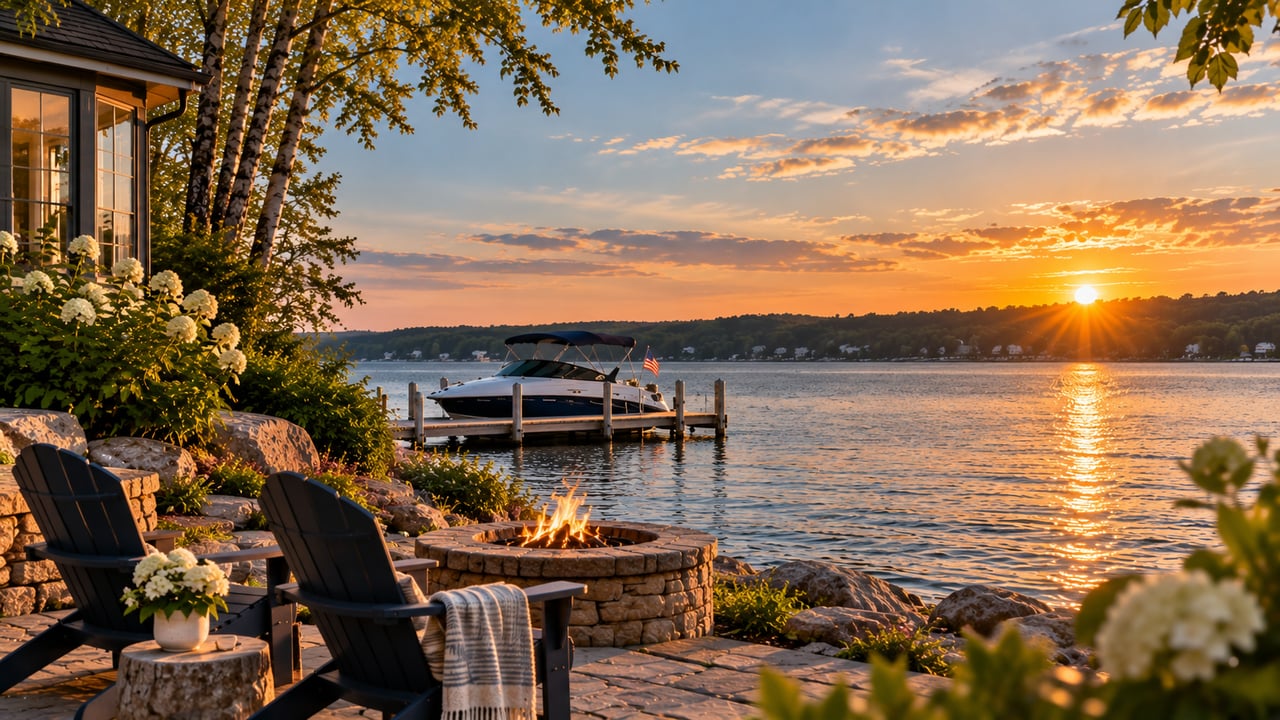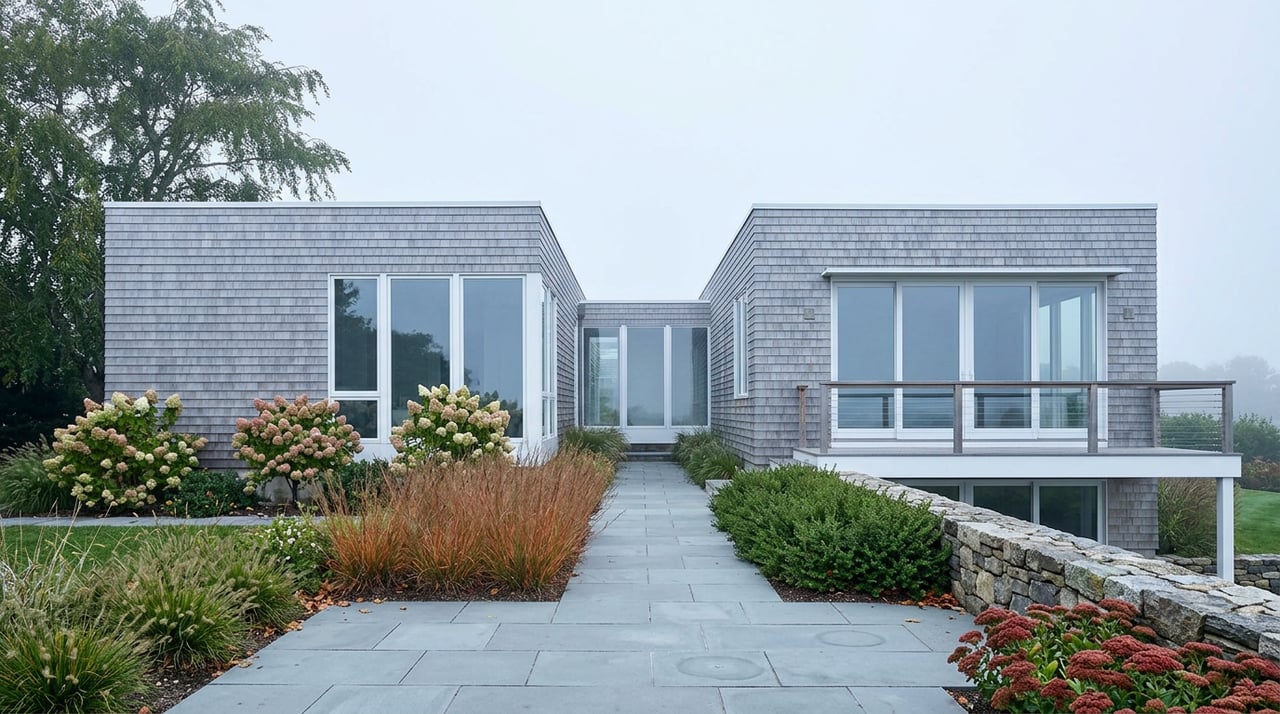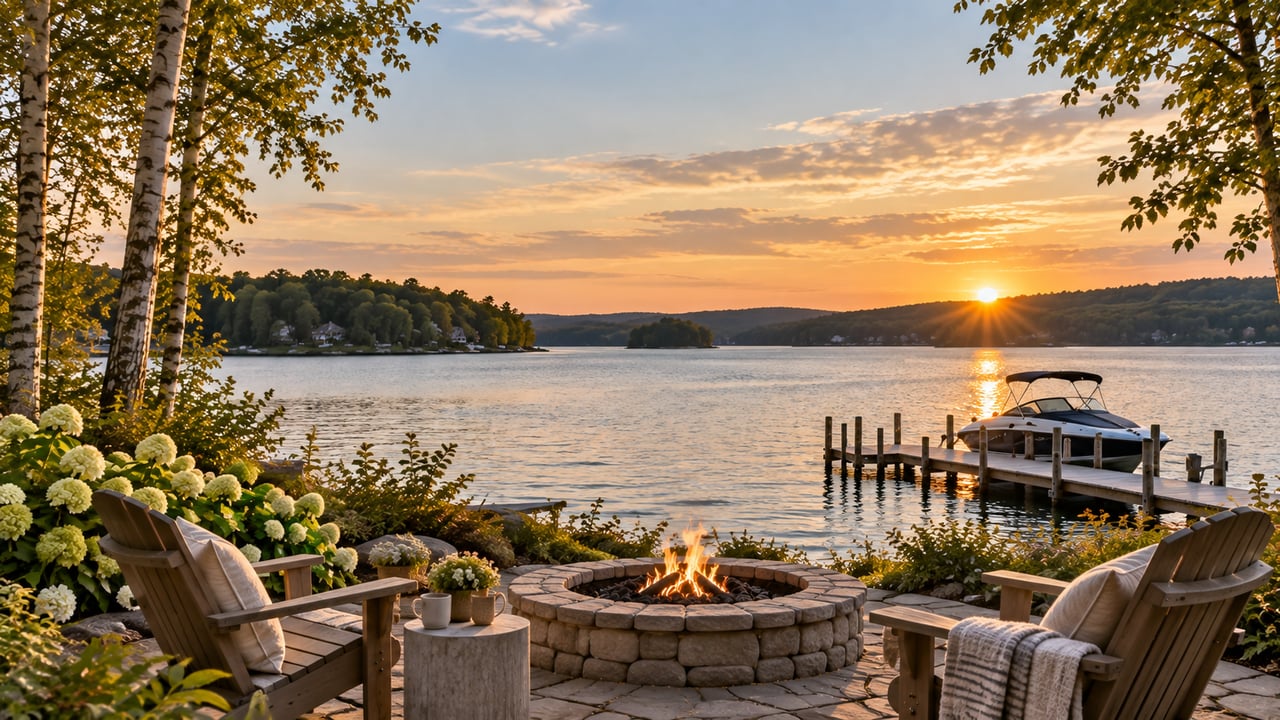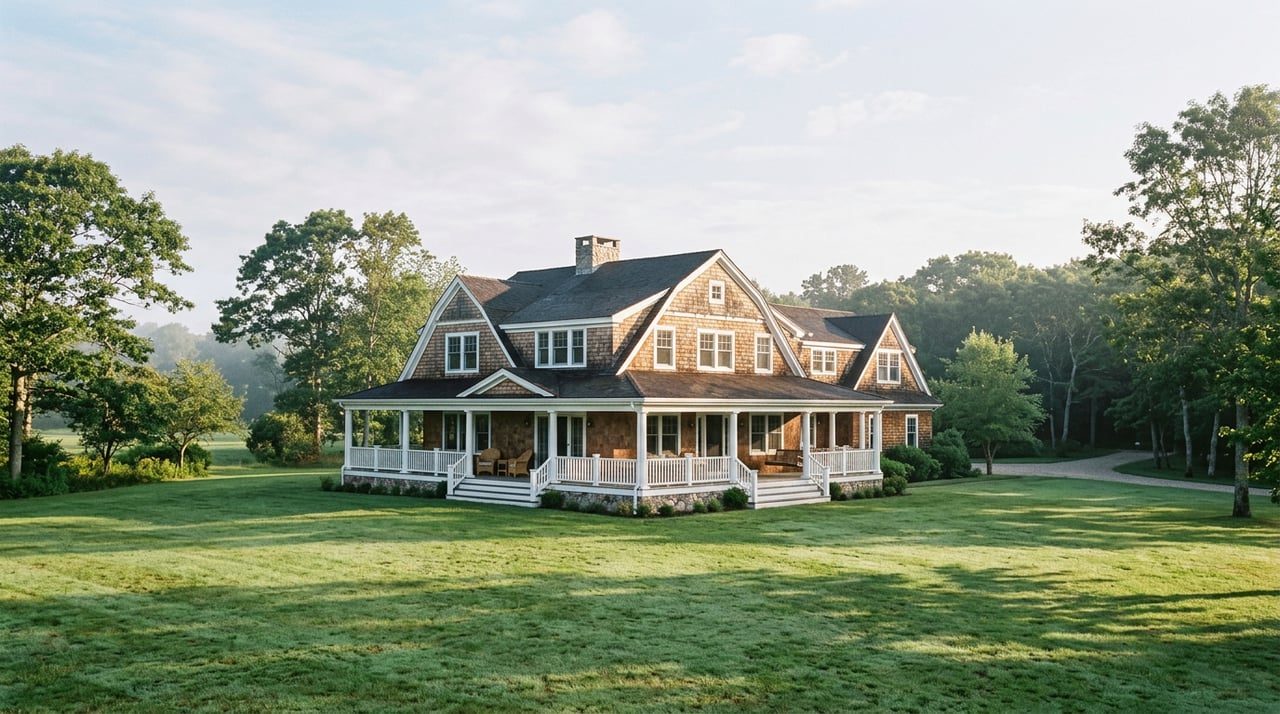
What happens when you fall in love with a house in Harbor Springs, agree on a price, and then learn the deed is only the second signature you need?
That's the moment a lot of buyers hit when they set their sights on Harbor Point or Wequetonsing, the two private cottage colonies that sit on either side of downtown Harbor Springs like bookends. Both look, from the road or the water, like the rest of the town's storied waterfront. Gabled cottages, wraparound porches, a century of paint layered onto the same clapboard. But the transaction underneath those roofs runs on different rules than anywhere else in town, and understanding why matters if you're comparing Harbor Springs neighborhoods and trying to figure out what your money actually buys in each one.
The Point That a Board Still Controls
Harbor Point's story starts in 1878, when a group of businessmen from Lansing, who had been camping on the point, decided they liked it enough to buy it. They formed a stock company, sold shares to nineteen founding members, and purchased the fifty-two acre point from a Franciscan monk in Cross Village. Rather than platting the land into ordinary lots with ordinary deeds, the new association's board of directors kept title to the ground itself. A member who wanted to build first had to win the board's approval, then buy a share of stock, and only then could they select a lot to put a cottage on.
That structure is not a museum piece. It is still how Harbor Point describes itself to its own members today. The association's current website lists a Stockholder Services Committee, a dedicated Sales and Transfers process, and a members-only login sitting right alongside its bylaws and rules and regulations. The specific numbers have obviously changed since a share cost a hundred dollars, but the architecture hasn't: a transfer at Harbor Point still runs through the association before it runs through a closing table. That is the detail most outside descriptions of Harbor Springs never mention, because it doesn't show up on a listing sheet. It shows up when your agent tells you the timeline includes a step that has nothing to do with your lender.
By the turn of the last century, Harbor Point had filled with roughly eighty cottages and a membership roll that read like a who's who of Midwestern industry, from Chicago's chewing gum fortune to Cincinnati soap money. The point still restricts its entrance to members and guests, and cars still aren't part of the picture. Most of what you'll see of it, unless you know someone, is from a boat.
A Different Colony, a Different Kind of Closed
A few minutes away, on the other side of downtown, Wequetonsing runs on a related but distinct model. There's no evidence of a stock company here. Instead, an association that has governed the colony since the 1880s maintains the commons and the old clubhouse, known locally as the Casino, and the practical effect has been a neighborhood where cottages tend to stay inside the same families for generations rather than turning over on the open market.
That's a different kind of friction than Harbor Point's board approval, but it produces a similar outcome for a buyer standing outside looking in. You won't find Wequetonsing cottages on the usual short-term rental circuit, and when one does come up for sale, it tends to move through relationships built over decades rather than a sign in the yard. The scarcity isn't artificial in the sense of a quota. It's structural. When the same families have been returning to the same porches since before the interstate existed, turnover was never going to look like turnover anywhere else.
What This Actually Changes for a Buyer
Here's the part that matters if you're the one comparing neighborhoods with a map open and a mortgage pre-approval in hand. Most of Harbor Springs, the homes along Beach Drive, the in-town streets a bike ride from Main Street, the newer construction on the bluffs, transacts the way real estate transacts everywhere: list, show, offer, inspect, close. Harbor Point and Wequetonsing sit inside that same town and inside that same market data, but they don't behave like it.
A few things follow from that:
The timeline is not just about your lender. At Harbor Point specifically, expect a step where the association reviews the transfer. That's not a delay your mortgage broker can fix, because it isn't a mortgage step. It's a membership step.
Price comparisons across Harbor Springs neighborhoods can mislead you if you don't account for this. A per-square-foot number pulled from a broad Harbor Springs data set will blend ordinary fee-simple sales with a small number of association-governed transfers that operate under an entirely different ownership logic. Treating them as the same kind of purchase misses what actually determines who gets to buy in.
Relationships do real work here that browsing can't replace. Because Wequetonsing rarely brings inventory to a public market and because Harbor Point's process runs through its own committees, knowing who to call, and having that call answered, carries more weight in these two pockets of town than it does almost anywhere else in Northern Michigan.
None of this makes either community unwelcoming. It makes them a genuinely different category of purchase sitting inside a familiar zip code, and it's the kind of thing worth knowing before you fall for a listing photo.
The Rest of Harbor Springs Doesn't Work This Way
It's worth saying plainly: this is not how Harbor Springs real estate works as a whole. The overwhelming majority of homes in town, from the historic district near downtown to the newer builds along the bluff, transfer with a standard deed and no association board standing between an accepted offer and a closing date. Harbor Point and Wequetonsing are the exception precisely because they were built as private resorts in the 1870s and 1880s and never fully shed that structure, not because Harbor Springs at large operates behind velvet ropes.
That distinction is exactly why it pays to work with someone who knows which few blocks of a small town carry a different rulebook. If you're weighing a move to Harbor Springs and trying to understand what separates one address from another beyond the view, this is one of the differences that actually matters, and it's the kind of thing that rarely makes it into a generic guide to the area. For a broader look at how off-market dynamics show up elsewhere in town, it's worth reading about why some Harbor Springs homes never hit the open market at all, a pattern that shares some DNA with what's happening at Harbor Point and Wequetonsing even without a formal stock structure behind it.
Bringing Local Knowledge to an Uncommon Transaction
Understanding a market like Harbor Springs means understanding that "for sale" doesn't always mean the same thing twice, even within the same few square miles. That's the kind of nuance that comes from years of watching these specific streets, these specific associations, and these specific families, not from a national market report.
If you're comparing Harbor Springs neighborhoods and want an honest read on what a particular address actually requires, from financing timelines to association approval to the relationships that open doors before a listing ever appears, Kristin Keiswetter Clark has spent a career rooted in this exact stretch of Little Traverse Bay. Whether you're weighing Harbor Point against a bluff-top new build or trying to understand what buying into Wequetonsing would really involve, the conversation is worth having before you write an offer.
Ready to talk through what a specific Harbor Springs address, association or otherwise, would mean for you? Plan Your Next Move and let's start with the questions that don't show up on the listing sheet.