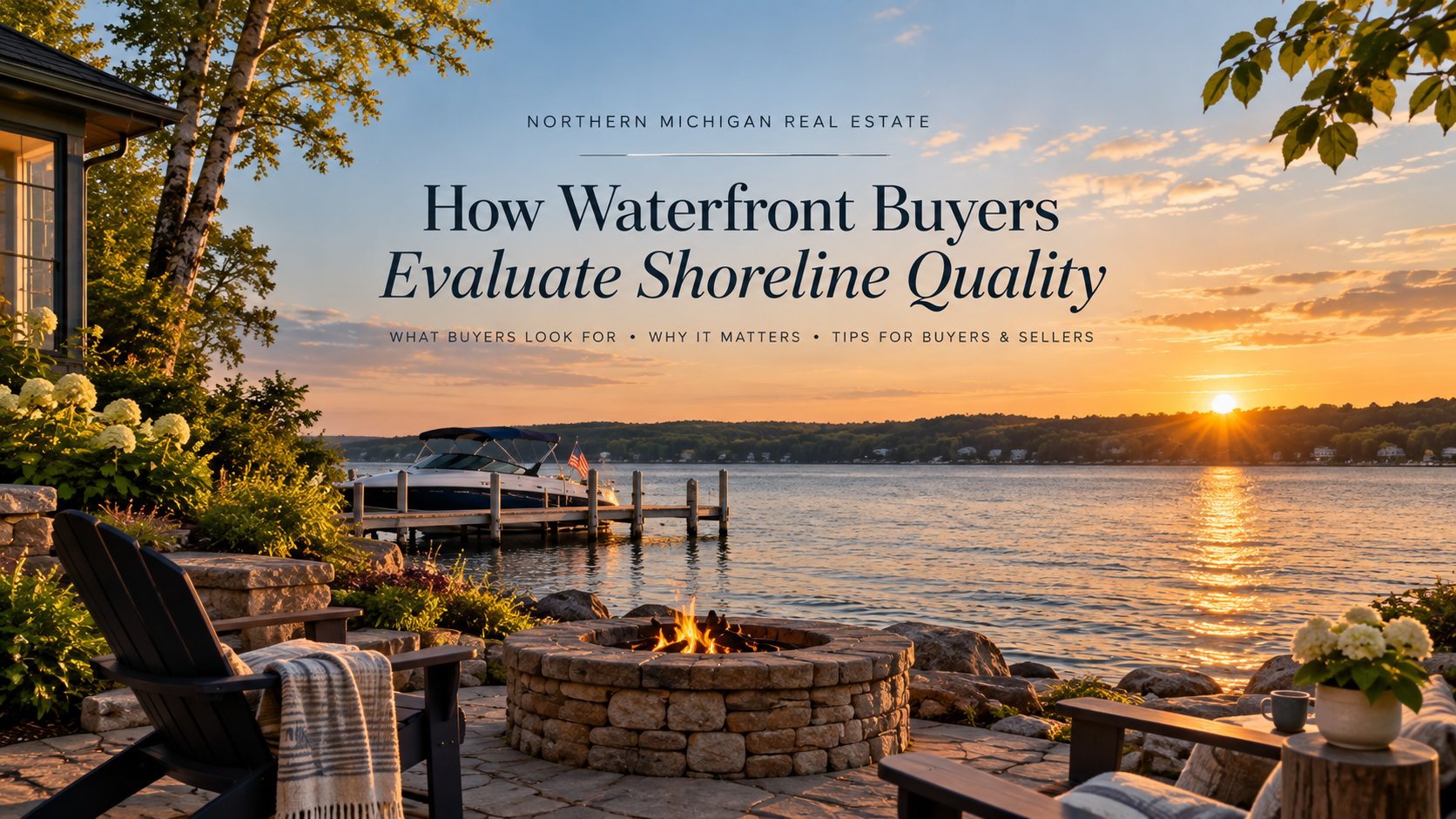
It’s one of the questions I wish more buyers asked before falling in love with the house.
When you’re touring lakefront homes in Northern Michigan, it’s easy to focus on the obvious things: the view from the living room, the kitchen, the number of bedrooms, or how the house feels when you walk through the door. But how waterfront buyers evaluate shoreline quality deserves just as much attention. The shoreline influences how you actually use the property, what you may need to maintain, and what another buyer may notice when it’s eventually time to sell.
Around Petoskey, MI, Walloon Lake, Crooked Lake, Lake Charlevoix, Little Traverse Bay, Harbor Springs, Bay Harbor, Good Hart, and Cross Village, “waterfront” can mean very different things. Two beautiful homes on the same body of water can offer completely different waterfront experiences.
That’s why I tell buyers: don’t just evaluate the house. Walk all the way to the water.
What Does “Good Shoreline” Mean on a Northern Michigan Lake Home?
There isn’t one perfect shoreline.
A buyer looking for a swimming-friendly cottage may evaluate a property differently from someone primarily interested in boating, privacy, sunsets, or simply having a beautiful view of the water.
Instead of trying to label a shoreline as universally “good” or “bad,” I look at how well the waterfront fits the buyer’s intended use and what physical, regulatory, and maintenance considerations come with it.
These are some of the things worth studying.
1. Start With the Actual Water Entry
Stand at the water’s edge and look down.
Is the entry sandy, rocky, mucky, weedy, or some combination? Does it become deep quickly, or stay shallow for a considerable distance? Is there a substantial drop from the house to the shoreline?
Photos can make almost any waterfront look beautiful. They don’t necessarily tell you what it feels like to step into the lake.
For someone planning to swim frequently, the lake bottom and depth near shore may matter enormously. A buyer who primarily wants to keep a boat at the property may care more about adequate water depth and the practicality of the dock.
Neither preference makes one property objectively better. It simply makes the shoreline more or less suitable for that particular buyer.
2. Look at the Frontage — But Don’t Stop at the Number
Waterfront buyers naturally ask, “How many feet of frontage does it have?”
That matters, but frontage alone doesn’t describe the experience.
I also want buyers to notice the shape and usability of that frontage. A property may have an impressive number on paper while topography, vegetation, neighboring improvements, or shoreline configuration affects how much of it feels practically usable.
That distinction is particularly important when comparing Walloon Lake property values, Crooked Lake MI real estate, Lake Charlevoix homes for sale, or Little Traverse Bay homes.
When doing any informal lakefront investment analysis, I wouldn’t compare waterfront properties on frontage alone. The quality, configuration, access, view, setting, improvements, and condition of the overall property all contribute to how buyers perceive it.
3. Walk From the House to the Water
This is one of the simplest tests—and one of the most revealing.
Imagine making that trip several times a day carrying towels, drinks, paddleboards, children’s lake gear, or supplies for the boat.
Is it nearly level? A gentle slope? A long staircase? A bluff?
A dramatic elevated site can produce an incredible view, but that does not automatically make it the right shoreline for every buyer.
The opposite is also true. A relatively level approach may make everyday water access easy, even if the house doesn’t have the same elevated panorama.
When people ask me about the lakefront property pros and cons of a particular home, this is exactly the kind of detail that often matters more in real life than it does in listing photos.
4. Understand What Is Natural and What Has Been Altered
Look closely at the edge itself.
You may encounter native vegetation, stone, riprap, seawalls, landscaped buffers, or combinations of several shoreline treatments.
This is an area where buyers should avoid assuming that a heavily engineered shoreline is automatically preferable.
Michigan’s Department of Environment, Great Lakes, and Energy (EGLE) recommends natural shoreline approaches for inland lakes where appropriate and notes that vertical walls and steeply sloped riprap can negatively affect natural resources and neighboring shoreline. EGLE specifically encourages alternatives such as vegetation and natural stone where conditions allow.
That doesn’t mean an existing seawall automatically makes a property undesirable. It means buyers should understand what is there, why it is there, its condition, and what future work could involve.
Certain projects at the water’s edge are regulated. On Michigan inland lakes, for example, dredging below the ordinary high-water mark requires a permit, and permanent docks or boat hoists left in year-round require permits. Qualifying seasonal private docks and hoists may not.
If modifying the shoreline is part of your plan, verify the applicable requirements with EGLE and appropriate local authorities before assuming a project can be completed.
5. A Beautiful Beach Is Not Permission to Change the Beach
This surprises some buyers.
You may tour a Northern Michigan waterfront property and immediately picture bringing in sand, dredging an area, rebuilding the dock, or changing shoreline protection.
Those improvements aren’t necessarily as simple as calling a contractor.
EGLE states that placing sand, pea stone, or other clean fill waterward of the water line on an inland lake requires a permit. Dredging waterward of the ordinary high-water mark also requires a permit.
Great Lakes waterfront has its own considerations. Construction activities including filling, dredging, docks, boat lifts, and seawalls on Great Lakes bottomlands below the statutory ordinary high-water mark require permits; Great Lakes projects requiring an EGLE permit also require U.S. Army Corps of Engineers authorization.
That distinction matters when comparing a cottage on Walloon Lake with a home overlooking Lake Michigan or Little Traverse Bay.
6. Pay Attention to Erosion and the Bluff
For Lake Michigan waterfront, shoreline movement deserves particular attention.
The Great Lakes shoreline is dynamic. EGLE identifies designated High-Risk Erosion Areas where shorelines have historically receded at an average rate of at least one foot per year over a minimum 15-year period. Regulated construction on parcels within those designated areas is subject to setback and permitting requirements.
That does not mean every Lake Michigan property in Good Hart, Cross Village, Harbor Springs, or elsewhere has an erosion problem. It means this is a property-specific question worth investigating rather than guessing from appearance.
For buyers considering Good Hart MI homes, the Cross Village lifestyle, or other Lake Michigan locations, I want shoreline and bluff conditions to be part of the due-diligence conversation when relevant.
7. Look at the Dock as Part of the Property Experience
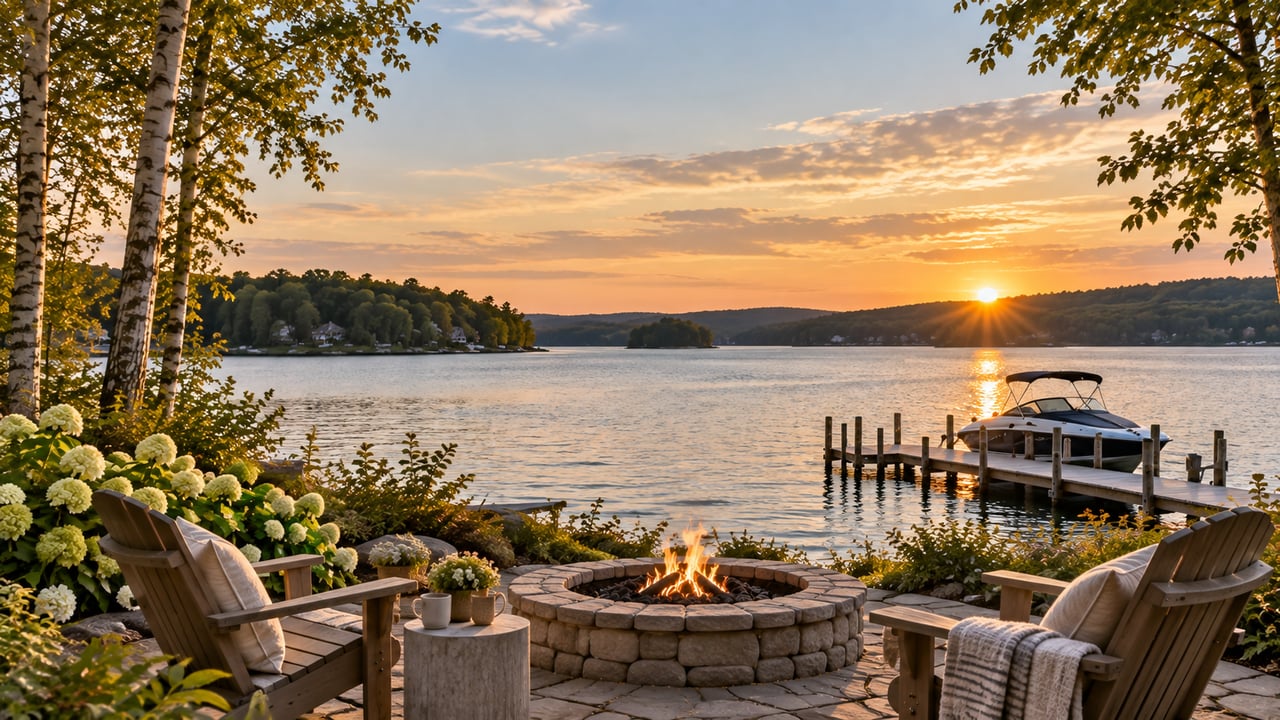
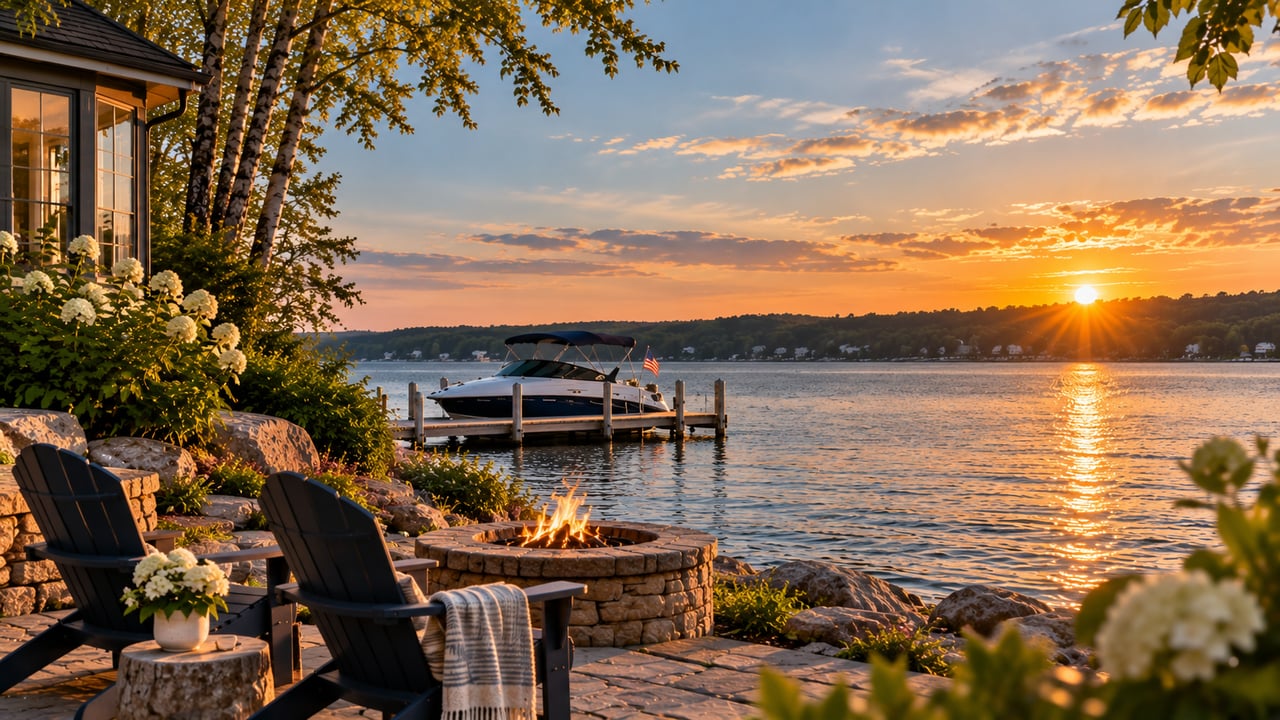
A dock is more than a pretty place for Adirondack chairs.
Look at how it relates to the water.
Does the existing configuration appear to work with the depth and shoreline? Where is the boat kept? How is the dock installed and removed if it is seasonal? Is there storage for dock sections or waterfront equipment?
And, importantly, don’t assume the dock you imagine can simply replace the one that exists.
Michigan recognizes riparian rights associated with qualifying inland waterfront ownership, including water access and dockage, but those rights exist alongside public-trust protections and applicable regulation.
For questions about a specific parcel’s legal rights, easements, boundary issues, or title, buyers should consult the appropriate attorney, surveyor, title professional, government agency, or other qualified expert.
8. Look Beyond the Shoreline to the View and Orientation
Sometimes the quality buyers respond to isn’t directly beneath their feet.
It’s what happens when they look outward.
What direction does the property face? What can you see across the water? How close do neighboring docks feel? Does vegetation create separation? How does the house sit relative to the lake?
This is where my earlier conversation about The Best Lakes for Buyers Who Want More Privacy comes back into play. Privacy is rarely determined by lake name alone.
A particular Walloon Lake property may feel wonderfully secluded, while another section of the same lake feels much more social. The same is true throughout the Northern Michigan communities I work in.
That’s why buying a home in Petoskey or searching for a cottage farther north works better when we evaluate the individual parcel—not just the ZIP code.
Shoreline Quality Can Matter When You Sell, Too
Sellers should be thinking about all of this from the opposite direction.
If you’re selling a home in Northern Michigan, your waterfront itself is part of the showing.
Before automatically spending money on Harbor Springs upgrades or trying to “increase home value,” start by making what you already have easy for buyers to understand.
Clear appropriate pathways. Tidy permitted waterfront improvements. Declutter outdoor living areas. Organize dock and lake equipment. Gather available records for significant shoreline work or permits. If relevant, have information about associations or shared-water access ready for buyers to review.
Professional listing prep also matters. A good Petoskey real estate photographer should show the relationship between the house, yard, shoreline, dock, and water—not simply produce one beautiful sunset photo.
The goal isn’t to disguise a rocky beach, steep approach, or natural shoreline. It’s to present the property accurately and help buyers understand what makes that particular waterfront appealing.
That approach is useful whether you’re preparing a Walloon Lake home, considering Boyne City home selling, or listing property in Emmet County or Charlevoix County.
My Waterfront Checklist for Buyers
When I’m helping someone evaluate lakefront homes in Northern Michigan, the conversation usually comes back to a handful of questions:
- What does the water entry actually feel like?
- How deep is the water near shore, and does it fit the buyer’s intended use?
- How usable is the frontage?
- How easily can you get from the house to the water?
- What shoreline protection or landscaping already exists?
- What is the condition and configuration of the dock or waterfront improvements?
- Are there erosion, bluff, wetland, permitting, easement, or association considerations that need further investigation?
- What are the view, orientation, neighboring docks, and privacy like?
- Does the waterfront work for the way you actually plan to use the property?
Those questions are far more useful than simply asking whether a property has “good frontage.”
Waterfront Real Estate Around Petoskey Is Property-Specific
That may be the biggest lesson I can give anyone researching Petoskey waterfront living.
There is no single formula for lake home value in Michigan.
Walloon Lake is different from Crooked Lake. An inland cottage is different from Lake Michigan frontage. Bay Harbor has its own setting and property types. Good Hart and Cross Village offer another version of waterfront living entirely. Lake Charlevoix brings yet another set of characteristics.
And within each of those markets, one property can differ substantially from the one next door.
As a Petoskey MI Realtor, that’s where I believe local representation earns its place—not by telling a buyer which shoreline they should prefer, but by helping them recognize the differences, ask better questions, and bring in qualified professionals when something requires expertise beyond real estate.
Current NAR policy also requires MLS participants working with buyers to enter into a written buyer agreement before touring a home. The agreement must address compensation as applicable, and brokerage fees and commissions are negotiable rather than set by law.
If you’re researching the benefits of a buyer’s agent or the Michigan home buying process, that transparency should be part of the conversation from the beginning.
Thinking About Buying or Selling Northern Michigan Waterfront?
If you’re comparing Northern Michigan waterfront, the listing photos are only the beginning.
I’m Kristin Keiswetter Clark with Gaslight Group Properties, and I work with buyers and sellers throughout Petoskey, Harbor Springs, Walloon Lake, Bay Harbor, Boyne City, Charlevoix, Crooked Lake, Good Hart, Cross Village, and the surrounding Northern Michigan market.
Whether you’re trying to buy a cottage in Northern Michigan, understand your current home value, or prepare a waterfront property for sale, I can help you look at the details buyers actually notice—and connect you with the appropriate professionals when a question moves into inspections, shoreline engineering, permitting, legal, tax, insurance, or financial territory.
If you’re thinking about buying a home in Petoskey or selling a home in Petoskey, reach out to Kristin Keiswetter Clark at Gaslight Group Properties. We can start with the property, the shoreline, and what you actually want from life Up North.
Frequently Asked Questions About Northern Michigan Shoreline Quality
What makes a good shoreline on a lakefront property?
There is no universal definition. Buyers commonly consider water entry, bottom conditions, depth, usable frontage, slope, shoreline stability, dock functionality, views, privacy, and how well the waterfront fits their intended use.
Does sandy frontage make a Northern Michigan lake home more valuable?
A sandy or swimming-friendly shoreline may appeal to some buyers, but it should not be treated as a universal value formula. Location, frontage, home condition, views, privacy, water access, improvements, market conditions, and comparable sales can all influence value.
Can I add sand to the shoreline after buying a Michigan lake house?
Not necessarily without regulatory review. On inland lakes, EGLE says placing sand or other clean fill waterward of the water line requires a permit. Other shoreline modifications can also be regulated.
Do I need a permit for a dock in Michigan?
It depends on the type and location. EGLE states that permanent docks and boat hoists on inland lakes require permits, while qualifying seasonal private, noncommercial docks and hoists may not. Great Lakes bottomland projects have different requirements.
Should I worry about erosion when buying Lake Michigan waterfront?
Erosion should be investigated on a property-specific basis. Michigan maintains designated High-Risk Erosion Areas along portions of the Great Lakes shoreline, with maps and construction requirements available through EGLE.
Who can help me evaluate a waterfront home near Petoskey?
A local Real Estate Agent in Petoskey Michigan can help you compare properties, market context, waterfront features, and available records. Specialized questions about structures, erosion, permits, boundaries, septic systems, insurance, taxes, or legal rights should be evaluated by the appropriate qualified professionals.