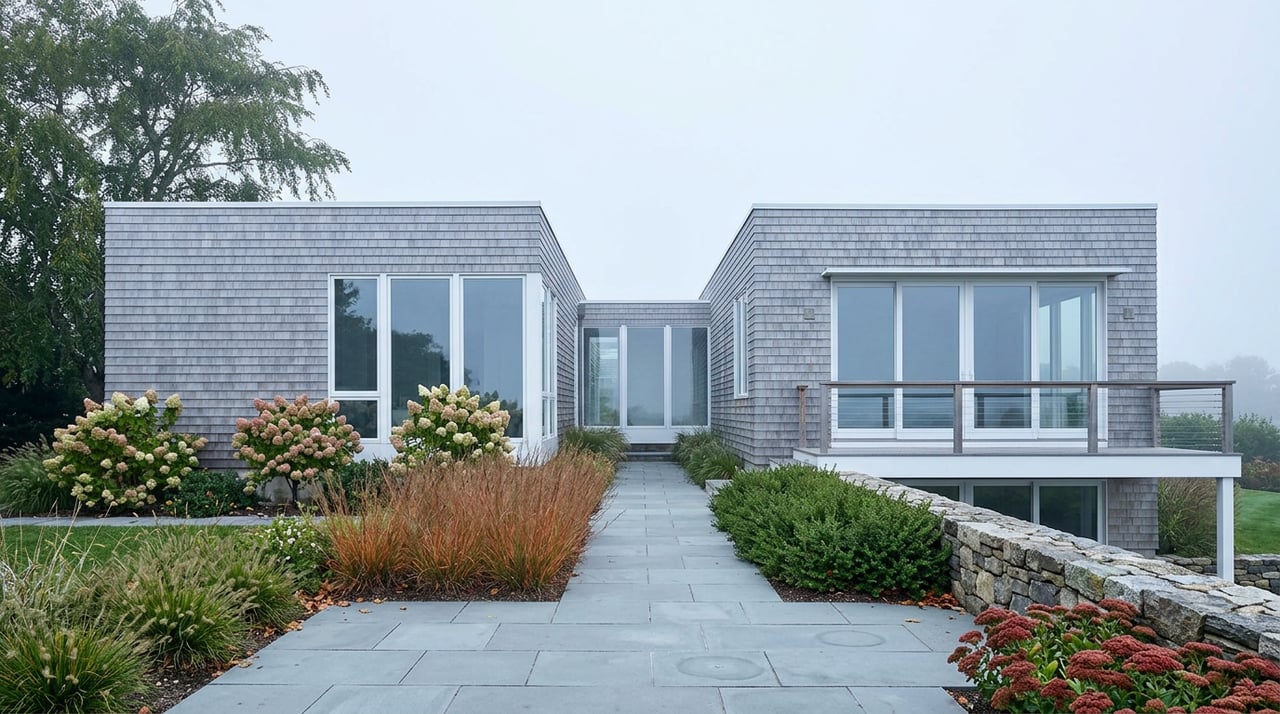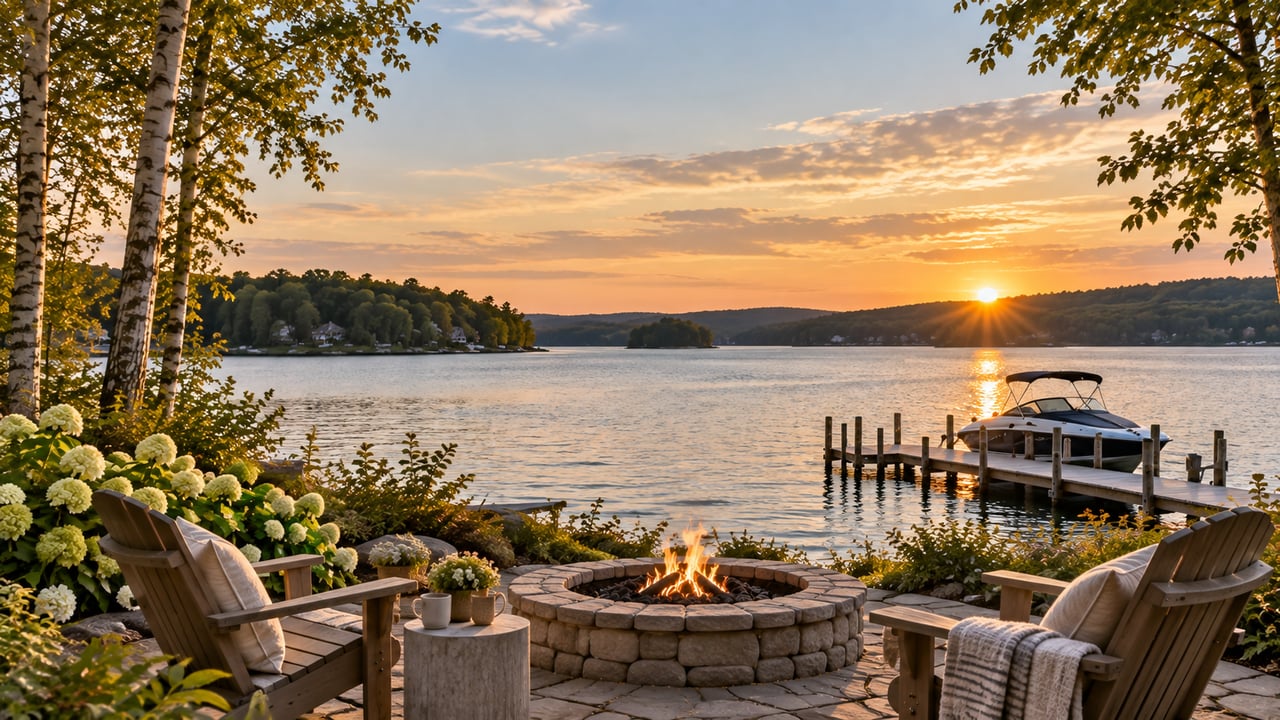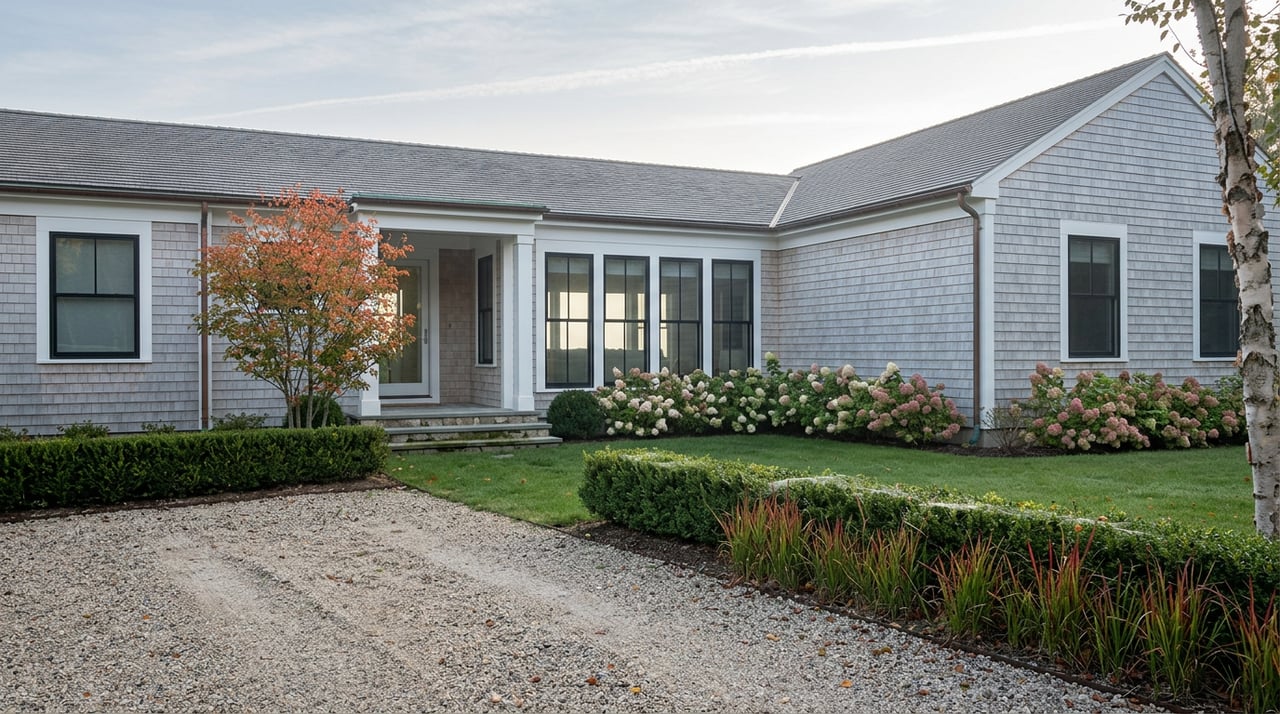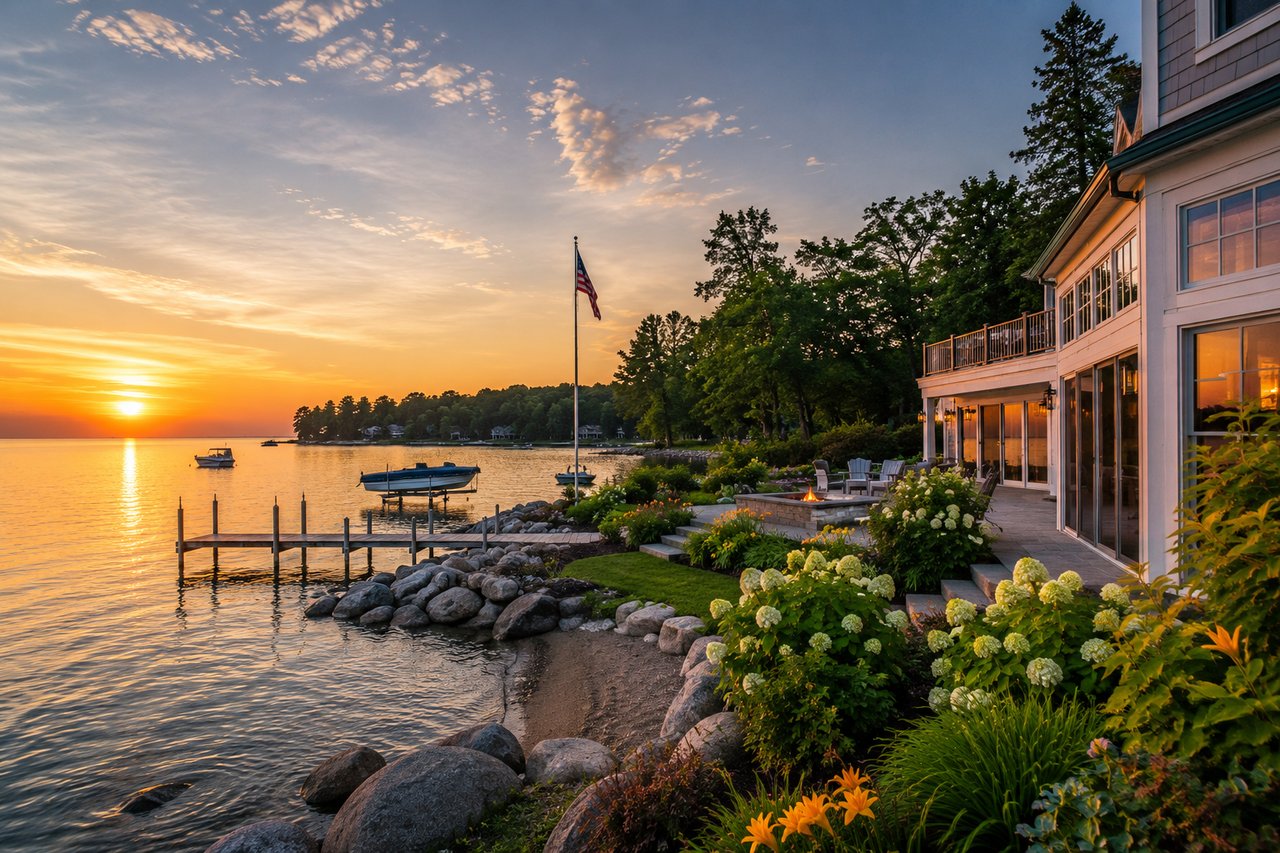

What actually makes one Northern Michigan waterfront home worth more than another?
It’s rarely the granite countertops.
When I’m looking at lakefront homes in Northern Michigan, the features that matter most are usually the ones you can’t easily recreate: the quality of the frontage, the view, how you reach the water, the shoreline, the orientation of the home, and how naturally the house connects to lake life.
That’s really the heart of The Waterfront Features That Add the Most Value. There isn’t one renovation or dock style that guarantees a certain return. Waterfront value is highly property-specific, especially around Petoskey, MI, Walloon Lake, Bay Harbor, Harbor Springs, Lake Charlevoix, Crooked Lake, and Little Traverse Bay.
As a Petoskey MI Realtor, I’d rather look at what buyers are actually responding to than give a homeowner a generic list of “high-ROI upgrades.”
Because on the water, location is only the beginning.
1. Usable Waterfront Is More Important Than Waterfront on Paper
A listing can say “100 feet of frontage,” but that doesn’t tell you what those 100 feet feel like.
Can you actually swim there?
Can you comfortably launch a kayak?
Is the bottom sandy, rocky, mucky, or deep immediately off shore?
Is there enough water for the way you intend to use a boat?
Is the shoreline easy to reach from the house?
Two properties can have similar frontage measurements and offer completely different experiences.
That distinction matters when evaluating Walloon Lake property values, Lake Michigan homes, or any waterfront investment in Michigan.
For sellers, this is why I want marketing to show more than an aerial photo with a property line drawn across it. If the waterfront is a strength, buyers should be able to understand exactly how it lives.
2. The View — Especially From Inside the House
A spectacular lake view from the end of the dock is wonderful.
A spectacular lake view from the kitchen, living room, primary bedroom, and dining table is usually much more meaningful to a buyer.
When I walk through a waterfront home, I pay attention to where the water becomes visible.
Do you see it the moment you walk in?
Are trees or landscaping framing the view beautifully—or blocking most of it?
Does the home actually face the lake?
Does an outdoor living area take advantage of the same view?
This is where thoughtful Michigan home prep can make a surprisingly big difference before listing. Sometimes sellers immediately think “renovation,” when selective trimming, cleaning windows, changing furniture placement, or removing visual clutter does more to reveal what buyers are really buying.
That’s also why a good Petoskey real estate photographer matters. The goal isn’t to artificially exaggerate the water. It’s to accurately show the relationship between the home and the lake.
3. Easy Access From House to Water
This is one of those features that doesn’t always show up neatly in property data.
Imagine two Lake Michigan homes with beautiful views.
One has a gentle path from the house to the beach.
The other has a substantial bluff and a long staircase.
Both may be beautiful. Both may appeal to the right buyer. But they offer very different ownership experiences.
Topography matters.
So do stairs, pathways, retaining structures, deck placement, and how easily you can move between indoor living spaces and the waterfront.
When buying a home in Petoskey or comparing Little Traverse Bay properties, I encourage buyers to physically walk that route.
Take the same path you’ll take with towels, coolers, paddleboards, children’s gear, or whatever else belongs to your version of lake life.
On waterfront property, convenience has value because it affects how often you actually use the feature you paid a premium to own.
4. A Good Dock and Boating Setup
For boating buyers, the dock can become almost as important as the kitchen.
But I wouldn’t tell a seller simply to install the biggest dock possible and assume it will increase value.
First, the setup needs to fit the shoreline and local regulations.
Michigan EGLE says permanent docks and boat hoists left in an inland lake year-round require a permit. Private, noncommercial seasonal docks and hoists generally do not require a permit when they meet state criteria, including not interfering unreasonably with navigation, water flow, or wetlands.
So for buyers looking at Walloon Lake, Crooked Lake MI real estate, or Lake Charlevoix homes for sale, I want to know:
What dock exists now?
Is it seasonal?
Where is it stored?
How deep is the water?
What type of boat has historically been used there?
Are there association rules that also apply?
A well-maintained, practical waterfront setup can make a property far easier to picture owning.
An impressive-looking setup with unanswered permitting or maintenance questions can do the opposite.
5. A Healthy, Stable Shoreline
This one deserves more attention than it usually gets.
A giant seawall is not automatically a “premium waterfront improvement.”
For Michigan inland lakes, EGLE recommends natural shoreline treatments where appropriate and warns that hard vertical shoreline structures can contribute to problems such as scouring, turbidity, and impacts on neighboring shoreline.
On Walloon Lake specifically, the Walloon Lake Association and Conservancy encourages waterfront owners to maintain a vegetated greenbelt between lawn and water to help filter runoff before it reaches the lake.
That matters to sellers because the best waterfront presentation is not necessarily a lawn shaved all the way to the water.
Sometimes a well-managed natural shoreline is both beautiful and better suited to the lake.
Lake Michigan brings another layer of consideration. Michigan designates certain Great Lakes shoreline areas as High-Risk Erosion Areas, where long-term shoreline recession can affect setbacks and future construction.
For a buyer, knowing the shoreline is stable, understood, and properly maintained may be far more valuable than a cosmetic upgrade inside the house.
6. Outdoor Spaces That Actually Connect to the Lake
A waterfront deck is nice.
A waterfront deck that feels like an extension of the living room is better.
The outdoor spaces I find most compelling are usually positioned around the way people naturally use the property:
Morning coffee overlooking the water.
Dinner outside.
A screened porch on buggy evenings.
A place to watch the sunset.
Enough room near the water to sit comfortably without feeling like you’re balancing furniture on a slope.
That doesn’t mean every seller needs to build an enormous new deck before listing.
In fact, one of my recurring pieces of real estate advice in Northern Michigan is to first make the existing outdoor spaces look intentional.
Clean them.
Repair deferred maintenance.
Remove excess furniture.
Make the route toward the lake clear.
Let buyers see themselves using the space.
That can be much more effective than spending heavily on a project you may not recover dollar-for-dollar.
7. Orientation and Sunlight
This is a quiet waterfront feature buyers notice once they’ve seen enough homes.
Which direction does the property face?
Where does the sun rise?
Where does it set?
How much afternoon sun reaches the deck?
Does the home receive a famous Northern Michigan sunset—or softer morning light?
There is no universal “best” orientation. Someone who loves sunset entertaining may prioritize something different from someone who wants calm mornings on the dock.
But orientation is largely fixed.
That makes it one of the characteristics I consider carefully when doing a lakefront investment analysis or comparing current home values.
A renovated kitchen can be duplicated.
A particular view and orientation cannot.
8. Privacy Without Losing the View
Buyers often want two things at once:
The lake front and center.
And a little breathing room from neighboring homes.
Good landscaping can help create that balance.
Mature trees, thoughtful screening, the placement of the home on the lot, and the distance between neighboring structures can all influence how private a waterfront property feels.
The key word is balance.
Too much clearing can dramatically change the setting and, depending on the location, may also raise shoreline or permitting considerations. Too much vegetation can hide the very view buyers came to see.
For professional listing prep, I’m usually looking for selective improvement rather than wholesale removal.
9. Storage for the Way Lake Houses Are Actually Used
Nobody dreams about buying a lake house because it has a great storage room.
Then they buy one and suddenly own:
Life jackets.
Water skis.
Paddleboards.
Fishing equipment.
Boat accessories.
Outdoor cushions.
Bikes.
Beach toys.
Winter gear.
And somewhere, all of it has to go.
A garage, mudroom, waterfront storage area, boathouse where legally permitted, or simply smart interior storage can make a home significantly easier to use.
This is particularly relevant when comparing a cottage with a larger year-round property or an association home in Bay Harbor or around Petoskey.
The prettier property isn’t always the more functional one.
10. Well-Maintained Systems and Documentation
The least glamorous waterfront feature may be one of the most reassuring:
A property with good records.
Roof replacement.
HVAC service.
Septic pumping.
Well testing.
Dock work.
Shoreline work.
Permits.
Exterior repairs.
Winterization procedures.
For someone selling a home in Northern Michigan, documentation reduces unanswered questions.
This is especially important around Walloon Lake, where owners planning shoreline work, earth movement, septic changes, wells, or structural modifications may encounter township, county, or state requirements. The Walloon Lake Association and Conservancy maintains a current resource guide directing owners to the appropriate local and state offices.
When I’m helping someone prepare a house for sale, I want these records organized before a buyer asks.
Maintenance doesn’t make for the sexiest listing photo.
Confidence can still be a very valuable feature.
What Sellers Should Prioritize Before Listing a Waterfront Home
If you’re thinking, What should I actually spend money on before I list my lake house? I would start with the property’s existing strengths.
Make the water visible.
Make access obvious.
Repair the dock and stairs if needed.
Address deferred exterior maintenance.
Clean up outdoor gathering areas.
Organize maintenance and permit records.
Declutter the interior so windows and lake views—not furniture—become the focus.
Then decide whether larger Harbor Springs upgrades, Walloon Lake renovations, or Petoskey home improvements are actually justified by comparable sales.
The mistake is assuming that every beautiful renovation automatically increases a waterfront home’s value by more than it costs.
It doesn’t work that way.
What Buyers Should Look Beyond
If you’re buying Northern Michigan waterfront, don’t get so distracted by the house that you forget to evaluate the waterfront.
I’d rather have a buyer ask me about shoreline, access, sun exposure, water depth, dock history, road access, septic, well, association restrictions, and topography before obsessing over whether the bathroom tile is current.
You can change tile.
You cannot move Walloon Lake ten feet closer to the house.
That distinction becomes especially important when comparing Northern Michigan home prices across Petoskey, Walloon Lake, Bay Harbor, Harbor Springs, Boyne City, Lake Charlevoix, and other waterfront communities.
Waterfront Value Is Really About Experience
The strongest waterfront properties tend to make the water feel like part of the house rather than scenery sitting somewhere beyond it.
You see it.
You can reach it.
You can use it.
The property works with it.
And when those things come together, buyers tend to understand very quickly why one lake house feels different from another.
That is ultimately what I’m looking for when evaluating lake home value in Michigan.
Not simply, Does it have waterfront?
But:
How good is the waterfront experience?
Buying or Selling Waterfront Near Petoskey, MI?
I’m Kristin Keiswetter Clark with Gaslight Group Properties, a Petoskey Realtor and Real Estate Agent in Petoskey, Michigan, helping buyers and sellers navigate Petoskey, Walloon Lake, Bay Harbor, Harbor Springs, Boyne City, Charlevoix, and surrounding Northern Michigan communities.
If you’re wondering which improvements may help your waterfront property stand out—or you’re trying to compare two lake homes that look similar on paper—I’m happy to help you look at the details that actually matter in our market.
Because on the water, the most valuable feature usually isn’t something you added last year.
It’s the part of the property that made you want to live there in the first place.
Frequently Asked Questions
What waterfront features add the most value to a Northern Michigan home?
There is no universal dollar value for any single feature, but frontage quality, water views, shoreline usability, easy water access, orientation, privacy, functional boating access, outdoor living spaces, and property condition can all influence buyer demand and comparable value.
Does a dock increase the value of a lake house?
A functional dock can make a waterfront property more attractive to boating buyers, but value depends on the lake, water depth, shoreline, condition, permitting, and the type of dock. Michigan has different rules for seasonal and permanent inland-lake docks.
Does a seawall add value to waterfront property?
Not necessarily. A seawall should not automatically be viewed as a value-adding upgrade. Michigan EGLE recommends natural shoreline approaches when appropriate and notes that certain hardened shorelines can negatively affect natural shoreline processes.
Can I add sand to the beach at my Michigan lake house?
Possibly, but regulations matter. EGLE states that placing sand or other fill below the water line on an inland lake requires a permit. Limited placement landward of the water line may be allowed without one when it does not change the ordinary high-water mark or shoreline contour and is not placed in a wetland.
What should I look for when buying a Walloon Lake home?
Beyond the house itself, evaluate frontage, shoreline, water depth, orientation, dock setup, topography, privacy, septic or utility systems, access, and any applicable local regulations or association requirements.
Are Lake Michigan waterfront properties different from inland-lake homes?
Yes. Great Lakes properties can face different shoreline conditions, wave exposure, erosion concerns, and regulations. Some Lake Michigan shoreline is designated as High-Risk Erosion Area, which can affect future construction and setback requirements.