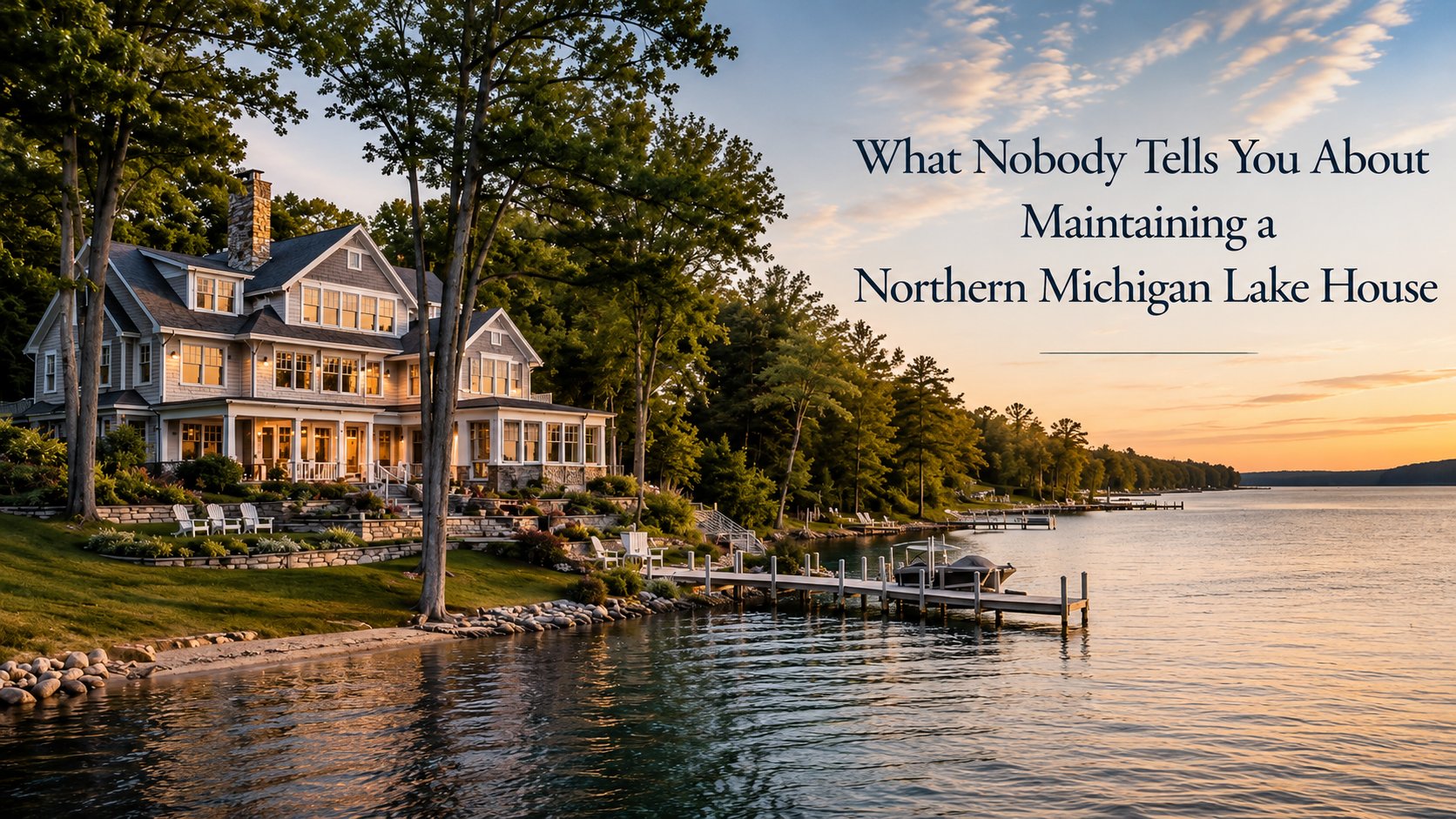
What does it really cost—in time, planning, and upkeep—to maintain a lake house in Northern Michigan?
That question usually comes after buyers fall in love with the dock, the view, and the idea of summers on the water.
But What Nobody Tells You About Maintaining a Northern Michigan Lake House is that the house is only one part of the property you’re maintaining. There may also be shoreline, docks, drainage, trees, septic or well systems, winterization, snow, ice, and the constant transition between seasons.
None of that should scare you away from Northern Michigan waterfront. It should simply be part of the decision.
As a Petoskey, MI Realtor, I’d much rather have buyers understand what ownership actually looks like before closing than discover it one repair at a time afterward.
The Calendar Matters Almost as Much as the House
Northern Michigan lake-house maintenance has a rhythm.
Spring is often about seeing what winter left behind.
Summer is when you actually use everything.
Fall is preparation.
Winter is when the systems you forgot about have a way of introducing themselves.
That becomes especially important with a seasonal cottage.
If your home sits empty for stretches of the year, maintenance isn’t necessarily less important because you aren’t there. In some ways, it requires more planning because you may not be around to notice a small problem becoming a larger one.
Michigan’s winter-preparedness guidance specifically warns homeowners about frozen pipes, ice dams, power outages and snow-related damage. The state recommends insulating vulnerable water lines, cleaning gutters, maintaining heating systems and taking precautions when a home will be unattended during cold weather.
For buyers considering a second home in Petoskey, Walloon Lake, Harbor Springs, Bay Harbor, Good Hart, Cross Village, Boyne City or elsewhere Up North, I always think this is worth discussing early:
Who is watching the house when you aren’t?
That question can matter almost as much as who mows the lawn.
Winterizing Is More Than Turning the Thermostat Down
One of the quickest ways to underestimate a Northern Michigan cottage is to think winter preparation means locking the door in October and returning in May.
If a home remains heated, Michigan emergency-management guidance recommends keeping enough heat in the property to reduce the risk of frozen pipes; the state advises that an unattended home generally not be set below 55°F unless the plumbing system has been properly shut down and drained.
Pipes in crawl spaces, attics and exterior walls deserve particular attention. Outdoor hoses should be disconnected, vulnerable plumbing insulated, gutters kept clear, and the heating system maintained. Snow and ice can also contribute to ice dams and water intrusion around roofs and gutters.
For a seasonal property, I would also want buyers to understand how the specific home has historically been closed for winter.
Does it stay heated?
Is the plumbing drained?
Is someone checking it?
Is there backup power?
What happens if the furnace fails during a January cold snap?
Those aren't glamorous questions, but they’re very good ones.
Your Dock May Be Part of the Seasonal Routine
A dock looks permanent in July.
That does not mean it stays there all year.
For Michigan inland lakes such as Walloon Lake, EGLE distinguishes between seasonal and permanent docks. A private, noncommercial seasonal dock or boat hoist generally does not require a Part 301 permit when it meets state criteria, while a permanent dock or boat hoist left in year-round requires permitting.
That means dock installation and removal can become part of spring and fall ownership for many lake properties.
And don't assume you can simply redesign a shoreline, expand a permanent structure or add sand because you own the property.
Michigan regulates certain activities where land and water meet. On inland lakes, projects involving dredging, filling, shoreline protection and certain structures can require EGLE review. Great Lakes shoreline projects have their own regulatory framework, sometimes involving both EGLE and the U.S. Army Corps of Engineers.
If changing the waterfront is important to your purchase, verify feasibility before treating it as part of your renovation plan.
Maintaining the Shoreline Is Different From Maintaining the Lawn
This is one of the biggest differences between a conventional home and lakefront homes in Northern Michigan.
The landscaping nearest the water isn't just landscaping.
It can influence erosion, runoff and lake health.
EGLE recommends natural shoreline approaches where appropriate rather than automatically hardening shorelines with vertical walls. The agency notes that some hard shoreline structures can contribute to scouring, turbidity and impacts on neighboring shoreline.
Walloon Lake provides a particularly good hyperlocal example.
The Walloon Lake Association and Conservancy encourages shoreline owners to maintain or establish a vegetated “greenbelt” between lawn and water so rainwater and runoff can filter through vegetation instead of flowing directly into the lake. It also tells property owners to seek guidance when planning shoreline work, changing septic systems, moving earth close to the lake or drilling a well.
So if your dream lake house includes a perfectly manicured lawn cut right to the water’s edge, it is worth learning what responsible shoreline management actually looks like first.
Sometimes less manicured is better lake stewardship.
Septic Is Easy to Forget—Until It Isn't
Not every Northern Michigan lake home is on municipal sewer.
If your property uses a septic system, maintenance needs to become part of the ownership calendar.
Michigan EGLE recommends homeowners generally have septic systems professionally inspected about every three years and tanks pumped as necessary, often around every three to five years depending on the system and its use.
The state also warns against driving or parking over the drainfield, overwhelming the system with excessive water use, and sending grease, wipes or inappropriate chemicals down the drains.
This matters particularly around waterways because failing systems can affect groundwater and surface water.
The Walloon Lake Association and Conservancy specifically identifies septic maintenance as part of protecting the lake and continues to include septic systems in its watershed stewardship work.
When you're buying a cottage in Northern Michigan, find out what system serves the property and obtain appropriate inspections and records rather than assuming everything underground is fine because everything aboveground looks beautiful.
And Then There’s the Well
The same goes for a private well.
If the property isn't served by municipal water, understand where the well is, how old it is, what treatment systems are present and whether appropriate water testing has been completed.
Michigan's Department of Health and Human Services recommends private-well owners understand and test their drinking water because groundwater can contain both naturally occurring and human-made contaminants.
This is one of those areas where a real estate agent can help coordinate information and due diligence, but testing, environmental, health and system-specific recommendations should come from qualified professionals and the appropriate local agencies.
Trees Are Beautiful. They’re Also Maintenance.
Part of the appeal of Northern Michigan lake homes is exactly what surrounds them: mature trees, wooded lots and homes tucked into the landscape.
Those trees deserve attention too.
Michigan winter-preparedness guidance recommends inspecting and addressing dead or hazardous branches that could fall on structures during snow, ice or high winds.
Lake properties can also accumulate leaves, needles and debris around roofs, gutters, drainage areas and outdoor structures.
This doesn't mean clearing every tree around the house.
It means understanding that a heavily wooded waterfront property may require ongoing arborist, gutter, roof and grounds maintenance that a buyer coming from a more suburban property hasn't previously managed.
Insurance Deserves a Conversation Before Closing
I would never tell a buyer what insurance coverage they need—that belongs with a licensed insurance professional.
But I absolutely think insurance belongs on the Northern Michigan home buying process checklist.
The Michigan Department of Insurance and Financial Services encourages homeowners to review coverage for water damage, seasonal possessions and other property-specific risks. DIFS also notes that flood damage is typically not included in a standard homeowners policy unless separate flood coverage has been purchased, and water or sewer backup coverage may not automatically be included.
That doesn't mean every lake house is in a flood zone or requires the same insurance.
It means don't assume.
Get property-specific quotes and ask questions about how the home is occupied, whether it is seasonal, waterfront characteristics, boats or recreational equipment, and any other features your insurer needs to evaluate.
Association Living Can Change the Maintenance Equation
Not every Northern Michigan waterfront property requires you to personally manage every exterior detail.
Condos and association communities around Petoskey, Bay Harbor, Harbor Springs and Walloon Lake can shift some responsibilities to an association.
But this is precisely where buyers need to read the documents.
What does the association maintain?
What remains the owner's responsibility?
Who handles snow?
Exterior siding?
Roofing?
Landscaping?
Docks?
Beach or shoreline areas?
Are there architectural rules governing exterior changes?
Association dues can look high or low in isolation. The more useful question is what are you receiving and what are you still responsible for?
That's one of the practical benefits of a buyer's agent in a hyperlocal market: helping you identify the questions to ask and the documents that deserve closer review.
Maintenance History Can Affect the Future Sale
If you're already thinking, “How does all of this affect my lake home value in Michigan?”—maintenance isn't a guarantee of appreciation, but deferred maintenance can certainly become part of a future buyer's evaluation.
Keep records.
Document septic servicing.
Save invoices for roof, dock, shoreline, HVAC, well and exterior work.
Keep permits where required.
Know when systems were replaced.
For sellers, this information can be incredibly useful during professional listing prep because it helps us answer questions confidently instead of scrambling for paperwork after an offer arrives.
And if you're preparing to sell a home in Petoskey, Walloon Lake or elsewhere in Northern Michigan, don't wait until photography week to address years of neglected maintenance.
A beautiful view gets someone interested.
A well-cared-for property gives them fewer reasons to hesitate.
What I Tell Buyers: Budget for the Property, Not Just the House
A lake house is not simply a house that happens to sit near water.
The waterfront is part of the asset.
So is the dock.
So are the trees, drainage, exterior, septic or sewer connection, water supply, road access and seasonal systems.
When doing a lakefront investment analysis or comparing Northern Michigan home prices, I want buyers to think about the complete ownership picture.
A lower purchase price doesn't necessarily mean lower ownership costs.
Likewise, a condominium with meaningful association dues may include maintenance that would otherwise be your responsibility.
There is no universal “better” structure.
There is simply the structure that fits how involved you want to be.
The Part Nobody Tells You Is Also the Best Part
Yes, owning a Northern Michigan lake house takes work.
There are docks to think about, winter to plan for, shorelines to respect and systems that need attention.
But that maintenance is attached to something pretty wonderful.
Morning coffee overlooking Walloon.
A summer evening on Little Traverse Bay.
A cottage where everyone ends up gathering.
A dock you know exactly how to put in because you've done it every spring for years.
Eventually, the rituals of taking care of the place become part of having the place.
The goal isn't to find waterfront ownership with zero maintenance.
It's to understand what you're signing up for so you can choose a property that lets you spend more time enjoying Northern Michigan and less time being surprised by it.
Buying or Selling a Northern Michigan Lake House?
I'm Kristin Keiswetter Clark with Gaslight Group Properties, a Petoskey MI Realtor and Real Estate Agent in Petoskey, Michigan, helping buyers and sellers navigate Petoskey, Walloon Lake, Bay Harbor, Harbor Springs, Boyne City, Charlevoix and surrounding Northern Michigan communities.
Whether you're buying a home in Petoskey, looking for your first Walloon Lake cottage, comparing Little Traverse Bay homes or preparing to sell a waterfront property, I can help you understand the real estate side of the ownership picture—and connect the property details to the way you actually want to live.
Because the right lake house shouldn't simply look wonderful in July.
It should still make sense when you think about January.
Frequently Asked Questions About Maintaining a Northern Michigan Lake House
How much maintenance does a Northern Michigan lake house require?
It depends heavily on the property. Direct waterfront, seasonal docks, private wells or septic systems, heavily wooded lots, older cottages and seasonal occupancy can all create different maintenance needs. Buyers should evaluate the complete property rather than the house alone.
Do I have to remove my dock from Walloon Lake every winter?
Michigan distinguishes between private seasonal and permanent inland-lake docks. Seasonal docks that meet state criteria generally do not require a Part 301 permit, while permanent docks or boat hoists left in year-round require permitting. Property owners should also verify any local or association requirements.
How often should a Michigan septic system be pumped?
Michigan EGLE references professional inspection about every three years and pumping as necessary, typically every three to five years, while noting actual needs depend on the system and its use.
Can I change the shoreline of my Michigan lake house?
Some shoreline work requires state and potentially federal authorization. Permit requirements depend on whether the property is on an inland lake, Great Lake, wetland or another regulated area and on the scope of the project. Verify requirements before beginning work.
Should I winterize a seasonal cottage in Northern Michigan?
A property that will be vacant during winter should have a specific cold-weather plan. Michigan guidance recommends protecting pipes, maintaining adequate heat if the plumbing remains active, clearing gutters and arranging for the property to be checked while you're away.
Who can help me buy or sell a lake house near Petoskey, MI?
Kristin Keiswetter Clark with Gaslight Group Properties helps buyers and sellers navigate lakefront homes throughout Petoskey, Walloon Lake, Bay Harbor, Harbor Springs and surrounding Northern Michigan communities, including property-specific questions that should be investigated during the buying or selling process.