
Is Petoskey a good place to live year-round, or does Northern Michigan feel completely different once summer ends?
That is one of the most common questions I hear from people who first fall in love with Petoskey in July.
The short answer to “Is Petoskey a Good Place to Live Year-Round?” is yes, for people who genuinely want four distinct seasons and understand that living here in February is a very different experience from spending a long weekend here in August.
Petoskey, MI is not simply a summer resort town that closes when the boats come out of the water. Downtown Petoskey describes the Gaslight District as a vibrant year-round business district, and there is a substantial local infrastructure of restaurants, shops, healthcare, recreation, and services that continues beyond peak season. At the same time, some restaurants, attractions, and seasonal businesses do close or reduce hours during winter.
That combination is part of what makes living here interesting.
You do not get one version of Petoskey.
You get four.
What Year-Round Living in Petoskey Actually Feels Like
Summer is the version most people meet first.
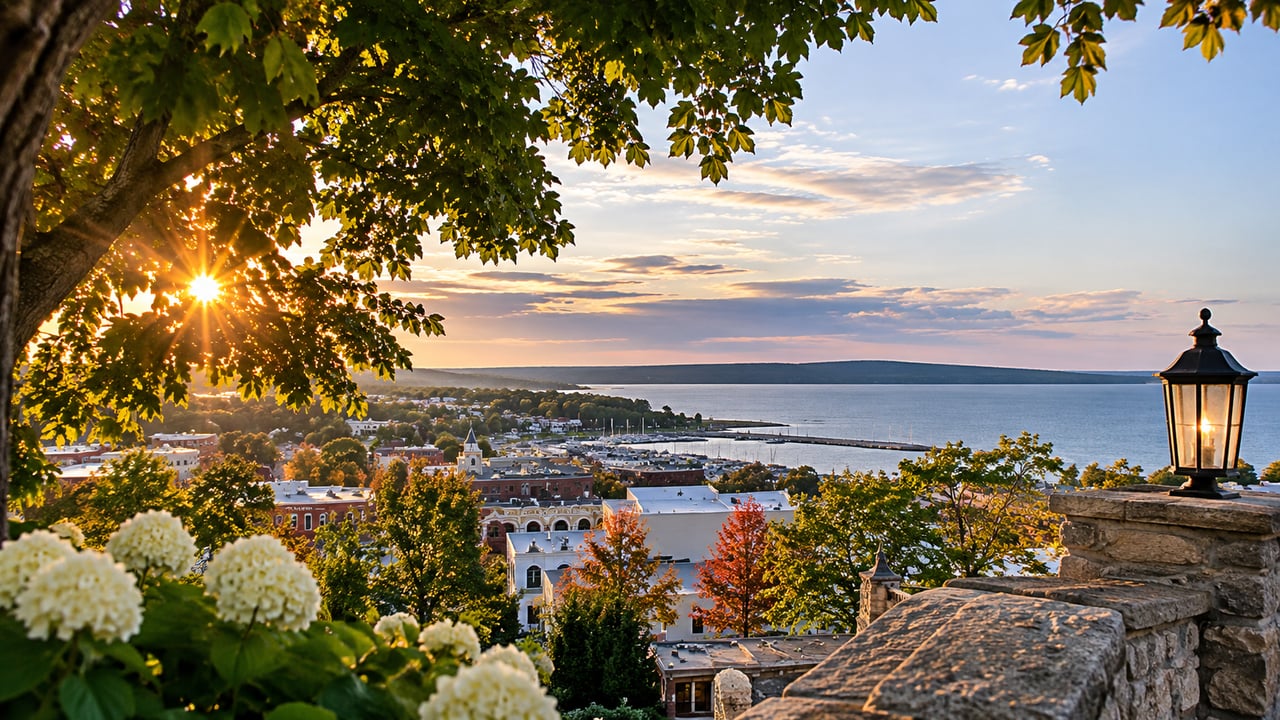
Little Traverse Bay is busy. Downtown is full. Boats are in the harbor. Patios are open. The days are long, and nearly every conversation eventually ends up near the water.
Then fall arrives and everything changes.
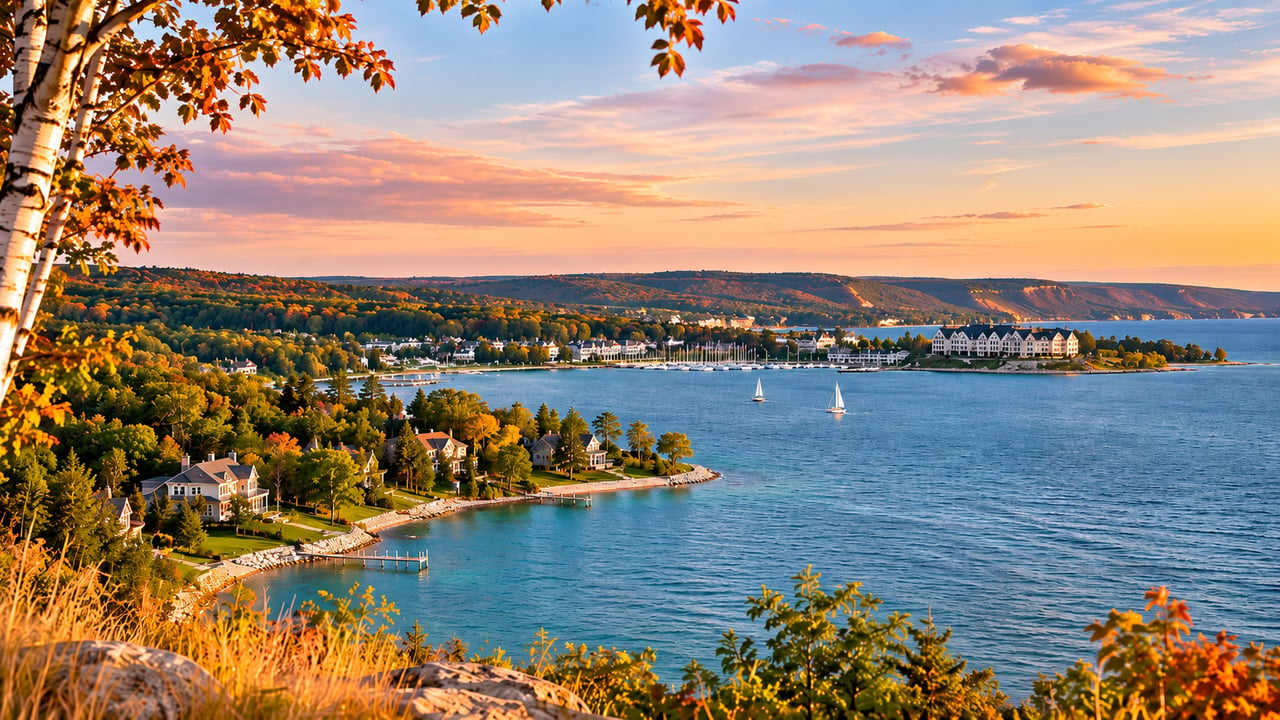
The roads quiet down. The color comes in. Downtown feels a little easier to wander. Lake homes begin transitioning from summer mode, and buyers often get a different look at properties once the landscaping is no longer doing all the talking.
Winter changes the rhythm again.
Petoskey becomes a ski town, a snow town, and a place where you start paying much closer attention to whether your driveway is steep.
And then spring arrives with snowmelt, drainage, muddy roads, shoreline changes, and that first glimpse of what the property actually looks like after winter.
If you are buying a home in Petoskey, I think that four-season perspective is one of the most important things you can have.
A house can be wonderful in July and still be the wrong fit for the way you want to live in January.
Yes, Petoskey Gets Real Winter
This deserves its own section because Northern Michigan winter is not decorative.
It snows.
A lot.
The National Weather Service currently lists Petoskey’s normal seasonal snowfall at about 123.8 inches, with a record of 184.8 inches during the 2013-14 season. Petoskey Area tourism information describes the winter season as generally stretching from late November into early April, depending on the year.
That does not make year-round living difficult by default.
It simply changes what matters in a house.
When I am helping someone compare Petoskey real estate, I want to know more than whether they like the kitchen.
How is the driveway configured?
Is there an attached garage?
Where will snow be stored?
Who handles plowing?
Is the road publicly or privately maintained?
How practical is the entry when everyone comes inside with wet boots?
How old is the heating system?
If it is an association property, which winter responsibilities are handled for you?
Those questions become especially important with second homes, Northern Michigan waterfront, and properties outside town where owners may not be there every week.
Winter Is Also Part of the Lifestyle
There is another side to all that snow.
People here use it.
The Petoskey area has access to The Highlands, Nub’s Nob, and Boyne Mountain for downhill skiing and riding, along with cross-country skiing, snowshoeing, fat-tire biking, sledding, ice skating, and other winter activities. Petoskey also has its own Winter Sports Park with sledding and outdoor skating.
So the question is not simply, “Can I tolerate winter?”
For many buyers, a better question is:
What do I want winter to look like?
Someone who plans to ski several days a week may evaluate location differently from someone who wants to walk downtown, work remotely, or spend most cold days watching Little Traverse Bay from the living room.
That is why I do not think there is one universally “best” place to live around Petoskey.
There are different properties that work for different priorities.
Downtown Petoskey Does Not Disappear After Labor Day
This is another misconception worth clearing up.
Petoskey absolutely gets quieter outside summer.
But quieter is not the same thing as closed.
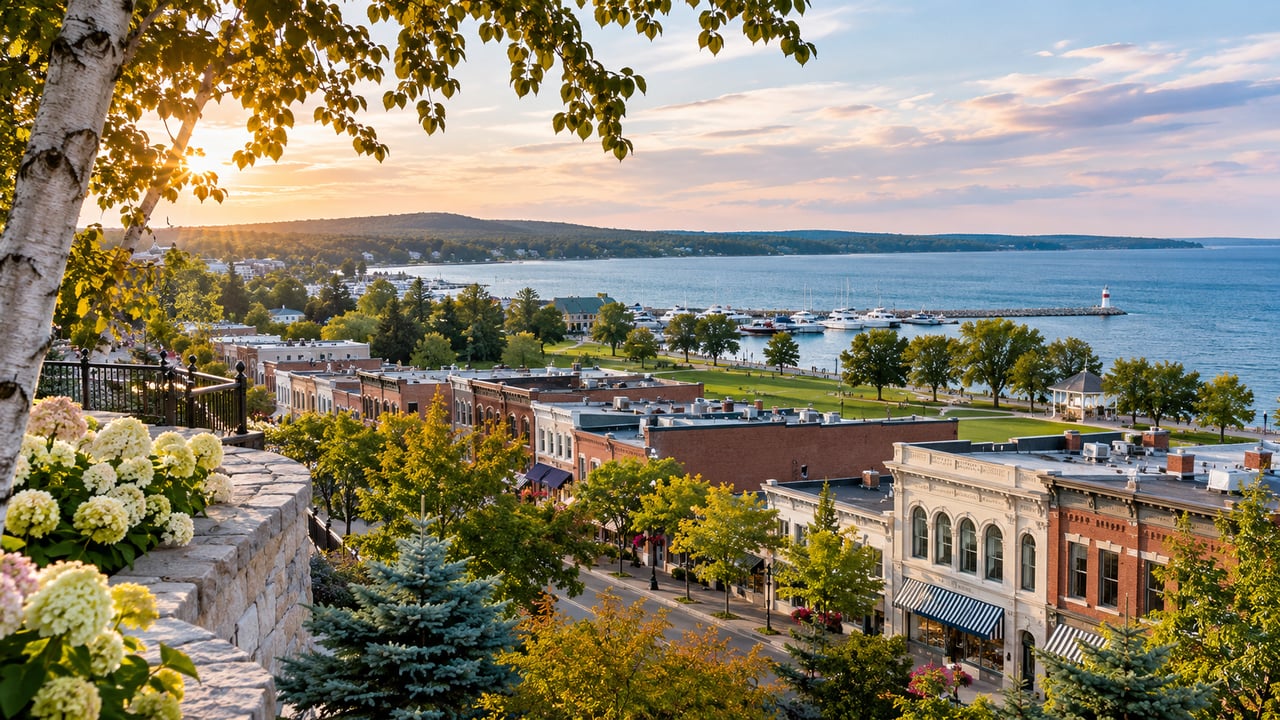
Downtown Petoskey specifically describes the Gaslight District as a year-round business district, with retailers, restaurants, professional offices, and other businesses operating beyond the summer tourism season.
That matters if you are considering Petoskey waterfront living or a home close to downtown.
You can still get coffee, go to dinner, browse shops, attend events, and use downtown in January.
The experience is simply different.
There are fewer visitors. Some seasonal places close. Hours may change.
Personally, I think this is when you start seeing the difference between visiting Petoskey and actually living here.
A summer weekend tells you what Petoskey does well when everything is happening.
A Tuesday in February tells you whether the everyday version works for you.
Healthcare Is Here Year-Round Too
For people considering a permanent move, healthcare is often part of the conversation.
McLaren Northern Michigan is located in Petoskey and is a 202-bed regional referral center serving 22 counties across northern Lower Michigan and the eastern Upper Peninsula. McLaren says more than 230 physicians represent nearly all medical and surgical specialties, with services including cardiovascular care, orthopedics, cancer care, neurosciences, primary care, and a 24/7 emergency department.
I would never tell a buyer whether a particular medical provider is right for their needs.
But when someone asks what infrastructure exists for year-round living in Petoskey, having a regional hospital in town is certainly part of the answer.
What About the Cost of Living in Petoskey?
This is where buyers need property-specific numbers rather than broad internet estimates.
Petoskey home prices can vary dramatically depending on location, condition, acreage, views, waterfront, association structure, and property type.
A home near downtown Petoskey is a different market conversation from Little Traverse Bay homes, Bay Harbor, Walloon Lake, Crooked Lake MI real estate, or rural Emmet County property.
The same goes for ongoing ownership costs.
In addition to the mortgage, buyers may need to consider property taxes, homeowners insurance, utilities, snow removal, association dues where applicable, maintenance, and waterfront-related expenses.
If the property becomes your qualifying permanent home, Michigan’s Principal Residence Exemption can exempt a principal residence from up to 18 mills of local school operating tax. A vacation or seasonal home does not automatically qualify. Tax eligibility is property- and owner-specific, so buyers should confirm their situation with the local assessor or a qualified tax professional.
Petoskey vs. Other Northern Michigan Communities
Living year-round in Petoskey also does not mean you have to limit your search to the city itself.
Some buyers compare Petoskey with Harbor Springs because they want access to Little Traverse Bay and nearby ski areas.
Others look toward Bay Harbor for a different association and resort-style ownership experience.
Walloon Lake may appeal to buyers whose priority is the lake itself.
Boyne City provides another downtown-and-water combination on Lake Charlevoix.
Charlevoix sits between Lake Michigan, Round Lake, and Lake Charlevoix.
Good Hart and Cross Village offer a quieter, more wooded experience farther north, where road access, internet, snow removal, and distance to services may become bigger parts of the due-diligence conversation.
None of those places is automatically better than another.
As a Real Estate Agent in Petoskey Michigan, my job is to help you compare objective differences based on the priorities you give me.
That is much more useful than trying to rank Northern Michigan communities from “best” to “worst.”
Buying a Home in Petoskey for Year-Round Use
If you are planning to live here full-time, I would look at the property differently than I would for someone buying a cottage they will use ten weekends a year.
Think about how you arrive home in a snowstorm.
Think about where coats, boots, skis, and wet gear go.
Look at the garage, drainage, driveway slope, roof, mechanical systems, windows, insulation, and winter access.
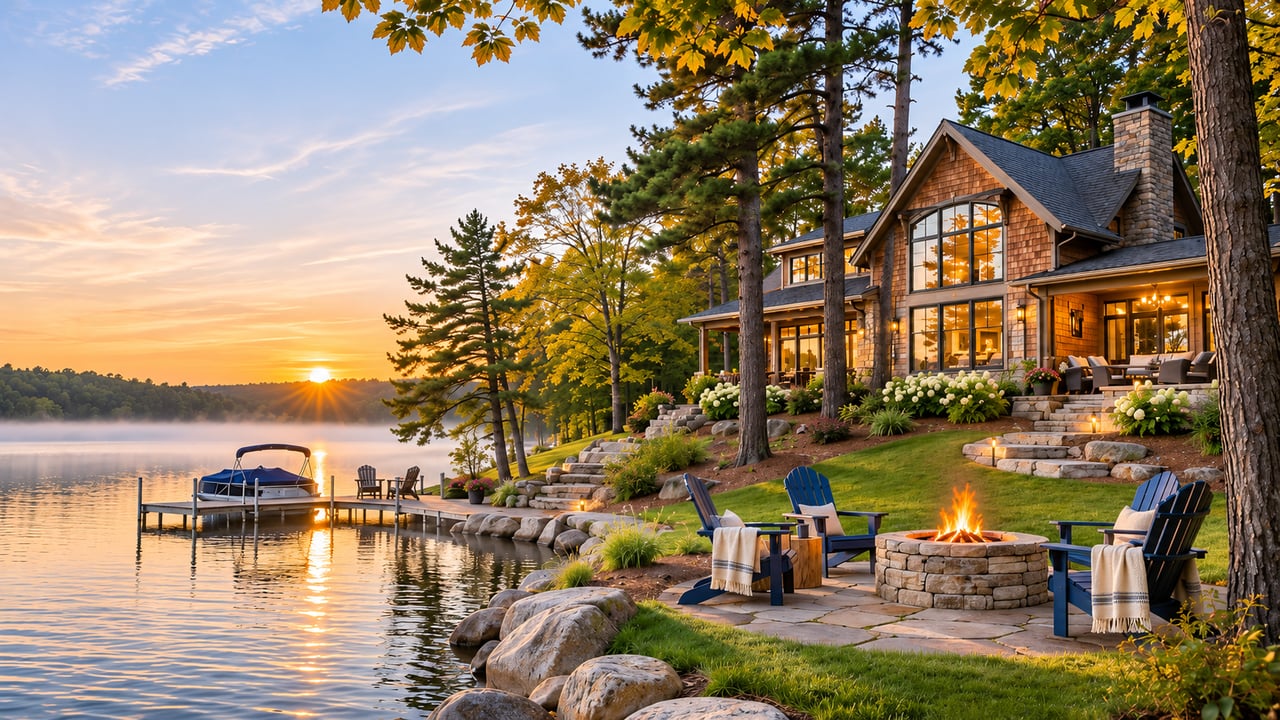
If you are looking at lakefront homes in Northern Michigan, look at the shoreline in more than one season if possible.
A summer waterfront showing can tell you a lot about recreation.
A fall or spring showing may tell you more about drainage, slope, exposure, shoreline condition, and how the house relates to the water without summer foliage.
And before touring homes with an MLS participant, current NAR practice rules generally require buyers working with that professional to enter into a written buyer agreement before an in-person or live virtual tour. The agreement outlines services and compensation, and compensation remains negotiable.
Sellers Should Think Year-Round Too
If you are selling a home in Petoskey, year-round functionality can be part of the story.
Buyers may care about the heated garage, mudroom, snow removal arrangement, updated mechanical systems, backup power, storage, road access, or how easily the property transitions between seasons.
That does not mean stuffing a listing with every maintenance detail.
It means good professional listing prep should help a buyer understand how the house actually works.
For waterfront homes, professional photography should show the relationship between the house, yard, shoreline, access, and water.
For downtown homes, walkability and proximity to amenities can be described factually.
For association properties, relevant documents and responsibilities should be available for buyers to review.
The goal is not simply selling a home faster.
It is helping the right buyer understand the property accurately.
So, Is Petoskey a Good Place to Live Year-Round?
Yes, if you like what Petoskey becomes after summer too.
That is the part I think people sometimes miss.
Year-round Petoskey is quieter.
Snowier.
More practical.
More local.
There are days when the lake looks almost tropical and days when you cannot see across the bay through the snow.
There are summer mornings downtown when every table seems occupied, and winter afternoons when the pace slows considerably.
Neither version is the “real” Petoskey.
They both are.
I’m Kristin Keiswetter Clark with Gaslight Group Properties, and I work with buyers and sellers throughout Petoskey, MI, Harbor Springs, Bay Harbor, Walloon Lake, Boyne City, Charlevoix, and the surrounding Northern Michigan communities.
If you are considering buying a home in Petoskey for more than just summer, I would be happy to help you look at properties through a four-season lens.
And if you are thinking about selling a home in Petoskey, we can talk about what today’s buyers are looking for and how your property fits into the current Petoskey real estate market.
Frequently Asked Questions About Living Year-Round in Petoskey
Does Petoskey shut down in winter?
No. Downtown Petoskey operates as a year-round business district, although some seasonal restaurants and attractions close or reduce hours during the colder months.
How much snow does Petoskey get?
The National Weather Service currently lists Petoskey’s normal seasonal snowfall at approximately 123.8 inches. Actual snowfall varies from year to year.
Is there year-round healthcare in Petoskey?
Yes. McLaren Northern Michigan is a 202-bed regional referral center in Petoskey with a 24/7 emergency department and a broad range of medical specialties.
What should I look for in a year-round Petoskey home?
Consider winter access, driveway configuration, garage and storage, heating systems, insulation, snow removal, drainage, road maintenance, and association responsibilities where applicable. Waterfront buyers should also evaluate shoreline condition and year-round access.
Does my second home qualify for Michigan’s Principal Residence Exemption?
A vacation or seasonal home does not qualify simply because you own it. Michigan’s PRE applies to a qualifying principal residence that you own and occupy as your permanent home. Consult the local assessor or a qualified tax professional about your specific situation.
Is Petoskey better for full-time living than Harbor Springs or Boyne City?
There is no universal answer. Petoskey, Harbor Springs, Boyne City, Bay Harbor, Walloon Lake, Charlevoix, and other Northern Michigan communities offer different property types, locations, amenities, and ownership considerations. A local Petoskey real estate agent can help compare those objective differences based on your priorities.
Who can help me buy or sell a year-round home in Petoskey?
Kristin Keiswetter Clark with Gaslight Group Properties helps buyers and sellers navigate Petoskey and surrounding Northern Michigan real estate, including downtown homes, second homes, association properties, and waterfront.